
Where Do Trucks Sleep? The Parking Problem Behind Every On-Time Delivery
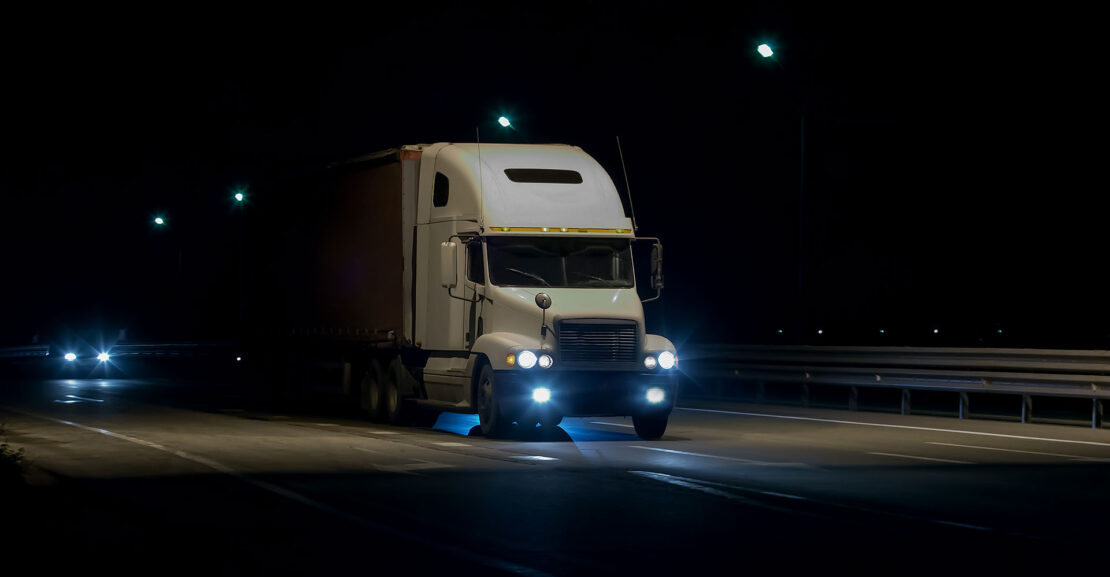
A customer sees the truck arrive, the doors open, and the delivery move through the dock. What they do not see is the decision that may have shaped that arrival hours earlier, often the night before: where the driver found a legal, safe place to stop.
Truck parking rarely gets the same attention as fuel prices, maintenance costs, driver availability, or delivery scheduling. Yet it sits beneath all of them as a practical operating constraint. A truck can be loaded correctly, mechanically sound, and running on schedule, but if the driver cannot find parking near the end of the day, the next delivery window can tighten quickly. Research from the American Transportation Research Institute and the American Association of State Highway and Transportation Officials puts the scale of the gap in concrete terms: nationally, there is only about one truck parking space for every eleven truck drivers.
That is why the truck parking shortage deserves to be viewed as more than a driver inconvenience. It affects route planning, safety, productivity, compensation, customer expectations, and the reliability of the freight network itself.
The Truck Parking Shortage Starts Affecting a Route Before the Truck Stops
Truck parking may look like an end-of-day issue, but drivers often begin thinking about it much earlier.
A route is usually built around familiar inputs: miles, traffic, pickup times, delivery appointments, fuel stops, weather, and available driving hours. Parking adds another layer. Drivers must not only determine how far they can legally travel, but whether a usable parking location will still be available when they get there.
That distinction matters.
A parking facility that has open spaces at 2:00 p.m. may be full by early evening. A rest area that appears convenient on a map may have limited commercial spaces. A truck stop near a major freight corridor may require an early arrival, a paid reservation, or a backup option several exits away.
As the day progresses, the driver is effectively managing two clocks. One measures the time remaining before the delivery or pickup. The other measures the shrinking opportunity to secure a place to stop.
For fleet managers and dispatchers, this can be easy to underestimate. Route software may show that a driver has another hour available, but that does not mean another hour is operationally useful. Continuing to drive may place the truck in an area with fewer parking options and no safe way to recover.
A route is not truly complete when the mileage fits the available hours. It is complete when the driver also has a realistic place to end the shift.
Why Truck Drivers Sometimes Stop With Time Still Available
Stopping early can look inefficient from a distance. In practice, it may be the most responsible decision a driver makes all day.
Drivers working under federal hours-of-service rules have fixed limits on driving and on-duty time. Those limits create a hard boundary. Once the available window is nearly exhausted, a driver cannot simply keep searching indefinitely for parking.
That reality changes behavior.
A driver may pull into a legal space with 30, 45, or even 60 minutes of driving time remaining because the next reliable location is too far away or too uncertain. Waiting could mean arriving at a full lot, leaving the route, or parking in a location that introduces safety and enforcement concerns.
The remaining time appears unused, but it is not necessarily wasted. It has been exchanged for predictability.
Across a large fleet, however, those decisions add up. Lost drive time can reduce weekly mileage, complicate appointment planning, affect driver earnings, and lower asset utilization. The impact may be small on a single day and substantial over a month.
This is where the parking shortage becomes an operational issue rather than a personal one. Drivers are often making rational choices within a system that offers limited capacity. Pressuring them to use every available minute does not create more spaces. It only pushes the risk later into the shift.
How Overnight Truck Parking Affects Morning Delivery Windows
Some late deliveries begin the night before.
Consider a driver who finishes unloading in the afternoon and plans to stop near the next morning’s appointment. The closest truck stop is full. The second option is also crowded. The driver eventually finds parking, but it is 25 miles away from the planned route.
The following morning now starts with added distance.
That detour may not appear significant, but it reduces the margin built into the delivery schedule. Traffic, construction, fueling, weather, or congestion at the customer entrance can consume what remains. A delivery that once looked comfortable becomes tight.
The opposite scenario creates a similar effect. A driver may stop early to secure parking, leaving additional miles for the next morning. Those miles cannot simply be ignored. They become part of the next day’s duty window and may affect every appointment that follows.
This is one reason parking shortages can be difficult to identify in performance reports. The final symptom may appear as a late arrival, lower mileage, or reduced utilization. The underlying cause may have occurred many hours earlier and many miles away.
Parking does not usually appear as a line item on a delivery report. Its effect is still there.
Driver Detention and Truck Parking Are Closely Connected
Time lost at a loading dock can create a second problem once the truck leaves.
Driver detention is commonly discussed in terms of productivity, compensation, and appointment delays. Those concerns are real, but detention also changes where and when a driver can stop.
A two-hour delay in the middle of the day may be inconvenient. The same delay late in the afternoon can eliminate the driver’s best parking options.
By the time the trailer is loaded or unloaded, nearby facilities may already be full. The driver then faces a shorter duty window, heavier traffic, and fewer legal places to park. A delay at one customer can therefore affect the next customer before that freight has even started moving.
Facility policies can intensify the problem. Some locations do not allow early arrivals, staging, or overnight parking. Others require drivers to leave immediately after loading or unloading. When those restrictions are combined with long wait times, the driver may have little room to adjust.
This is why detention and parking should not be treated as separate issues. They compete for the same limited hours.
The final hour at a dock can be more disruptive than the first because it may remove the last practical place to stop.
Unsafe Truck Parking Is Often a Symptom of Limited Capacity
When legal spaces disappear, trucks do not disappear with them.
Drivers may end up parked along highway ramps, shoulders, industrial streets, abandoned properties, or overcrowded rest areas. Some use retail lots that prohibit overnight commercial vehicles. Others stop in poorly lit locations with limited access to restrooms, food, or basic services.
These choices can create collision risks, cargo security concerns, personal safety issues, towing exposure, and enforcement problems. They may also place trucks where other motorists do not expect them.
It is easy to look at unauthorized parking and see a driver decision. Often, it is also an infrastructure problem made visible.
That does not mean every parking location carries the same risk, or that every driver is out of options. It does mean the system routinely forces drivers to choose among imperfect alternatives.
The shortage becomes most visible at night, when ramps and shoulders begin filling with trucks. By then, the operational failure has already occurred. Demand exceeded the available safe capacity.
Truck Parking Has a Direct Impact on Driver Experience
Driver experience is usually discussed through pay, equipment quality, home time, benefits, and relationships with dispatch. Parking belongs in that conversation.
The last hour of a shift should be a controlled transition into rest. For many drivers, it becomes a search.
They may be checking parking apps, calling facilities, watching remaining hours, and calculating whether the next location is worth the risk. If the first lot is full, the pressure rises. The driver is more tired, the legal window is smaller, and every additional mile narrows the available choices.
That uncertainty creates stress that is difficult to measure but easy to understand.
Parking also affects access to food, restrooms, showers, lighting, and a reasonably secure place to sleep. Those conditions shape how well a driver rests and how prepared that driver feels the next morning.
Over time, repeated parking difficulty can influence route preferences, job satisfaction, and retention. Experienced drivers may avoid certain lanes or delivery areas because they know the parking situation will be difficult. Newer drivers may struggle even more because they lack the location knowledge built through years on the road.
A reliable truck matters. So does a reliable place to stop it.
Truck Parking Availability Varies by Location and Time
The national shortage is not evenly distributed.
Some regions have more spaces than others. Some freight corridors have private truck stops but limited public rest-area capacity. Major cities, ports, warehouse clusters, and distribution centers may generate heavy truck traffic while offering very little nearby parking.
This unevenness is important because national totals can be misleading.
A parking space 80 miles away does little for a driver whose hours are expiring near a congested metropolitan area. A facility with open spaces at noon does not solve a shortage at 8:00 p.m. A location may technically exist but require a route deviation that makes it impractical.
Urban deliveries create another layer of difficulty. Local parking restrictions, land costs, residential opposition, and limited industrial space can make overnight truck parking especially scarce near final-mile destinations.
The issue is therefore not only the number of spaces. It is whether those spaces are available where and when freight operations require them.
For route planners, this means recurring lanes should be evaluated by experience, not just distance. Drivers often know which facilities fill early, which areas offer reliable alternatives, and where a small delay can create a much larger problem later.
That knowledge is operational data.
Can Truck Parking Technology Solve the Problem?
Technology can improve parking decisions, but it cannot create physical capacity.
Digital parking tools help drivers locate truck stops, rest areas, amenities, and reserved spaces. Some systems provide real-time or reported availability. Highway signs may alert drivers to open spaces before they reach an exit.
These tools can reduce unnecessary searching. They can also help drivers make earlier decisions and identify backup locations before the duty window becomes critical.
Still, the information has limits.
Crowdsourced availability may change quickly. A facility that appears open can fill before the driver arrives. Automated systems may provide better accuracy, but they are not installed everywhere. Reserved parking can offer certainty, though it adds another operating cost and may not be available on every route.
That is the ceiling on what better information can do: it sharpens the picture without adding a single new space.
Knowing that a lot is full before reaching it is useful. The driver still needs another place to go.
What Fleet Managers Can Learn From the Truck Parking Problem
Fleets cannot solve the national parking shortage, but they can plan with greater awareness of it.
The first step is recognizing that available drive time and usable drive time are not always the same. A route that consumes nearly every legal minute may leave no practical room for parking, detention, weather, congestion, or customer delays.
Recurring driver feedback can help expose these weak points. If several drivers consistently stop early on the same corridor, the issue may not be performance. It may be a predictable capacity constraint.
Dispatch teams can also evaluate parking alongside appointment times and customer policies. A late-afternoon pickup at a facility with frequent detention may require more margin than the mileage suggests. A customer that allows overnight staging may create meaningful flexibility. One that prohibits early arrival may remove it.
Equipment reliability also plays a role. A service issue, roadside delay, or unexpected vehicle change can consume the same limited margin drivers need to secure parking. Fleets cannot control every external condition, but they can reduce avoidable disruptions by keeping trucks ready and maintaining access to flexible capacity when needs change.
The larger lesson is simple: operational plans should reflect the way drivers actually move through a route, not only the way the route appears on a screen.
Why the Trucking Industry Cannot Schedule Its Way Out of the Shortage
Better planning narrows the risk. Infrastructure is what actually closes it.
Truck parking expansion involves land, zoning, funding, construction, maintenance, community concerns, and coordination among public agencies and private operators. High-demand freight corridors may also be located in areas where property is expensive and available space is limited.
Public projects can take years. Private development must make economic sense. Local governments may support freight movement while resisting truck parking near residential or commercial areas.
These tensions help explain why the shortage has remained persistent despite widespread agreement that it affects safety and efficiency.
Scheduling can reduce exposure. Technology can improve information. Drivers can learn the best locations. Fleets can build more realistic plans.
None of those actions creates asphalt.
The long-term solution requires additional capacity in the places where trucks actually travel, along with better information about when spaces are available. Until that happens, parking will continue to shape freight performance in ways that are easy to overlook.
Every On-Time Delivery Needs a Place for the Truck to Stop
A truck does not stop being part of the delivery system when the engine shuts down.
The location where a driver rests affects how far the truck travels that day, where the next shift begins, how much time remains before the next appointment, and how safely the driver can prepare for the road ahead.
That makes truck parking part of route planning, driver experience, customer service, and fleet productivity.
The shortage may be most visible at the end of the day, but its effects move through the entire schedule. It influences decisions made in the afternoon, deliveries made the next morning, and the amount of flexibility available when something goes wrong.
Every on-time delivery depends on motion. It also depends on having a safe place for that motion to pause.
For a related look at how growing operations run into similar infrastructure limits, see our piece on how quality fulfillment services can grow your business.
FAQs
Why is there a truck parking shortage?
Truck traffic has grown faster than parking capacity in many freight corridors. Development costs, land availability, zoning restrictions, limited public funding, and concentrated warehouse activity all contribute to the shortage. A Federal Highway Administration driver survey found that 98 percent of respondents had trouble finding safe parking within their regular operating area, and industry surveys now rank the shortage among trucking’s top operational concerns.
How does truck parking affect delivery times?
Drivers may have to stop early, travel off route, or begin the next day farther from the delivery location. Each of those outcomes can reduce the margin available before an appointment.
Why can’t truck drivers park on the side of the road?
Many shoulders, ramps, streets, and private lots prohibit commercial vehicle parking. These areas may also create collision risks, security concerns, or access problems.
Do truck parking apps help?
Parking apps and information systems can help drivers identify facilities and check reported availability. They improve planning but cannot solve the lack of physical spaces.
What can fleets do about the truck parking shortage?
Fleets can build more realistic route margins, use driver feedback, account for detention, identify recurring parking trouble spots, and avoid scheduling plans that depend on every available minute being used.
Urban delivery routes add their own layer of complexity — for practical strategies, see our related piece on Navigating the Challenges of Urban Deliveries: Strategies for Efficiency.