
When the Interstate Fills Up: The Arizona Holiday Travel Corridor
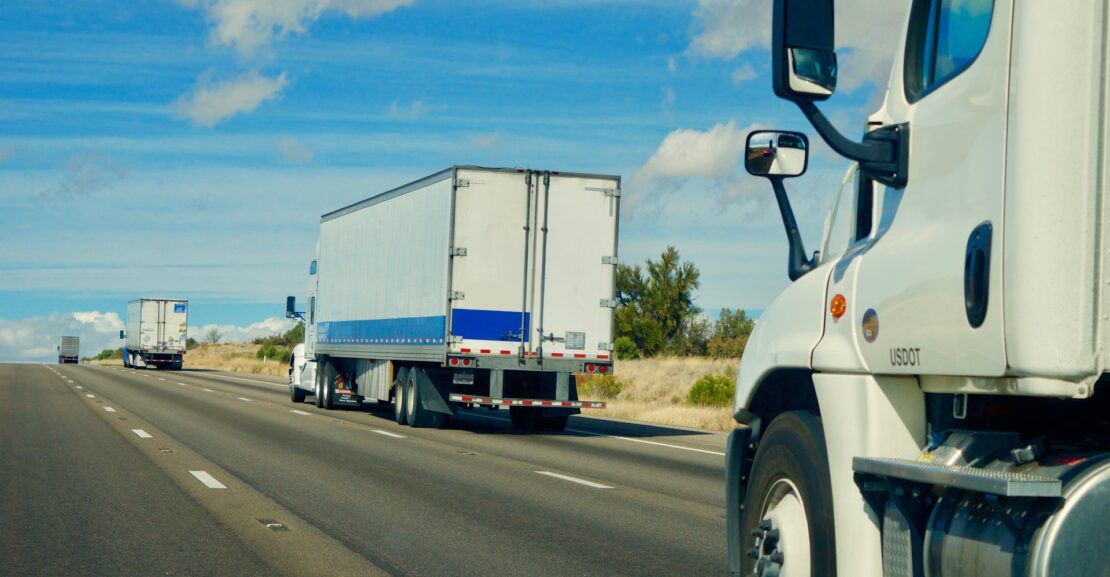
Thanksgiving traffic on the Arizona holiday travel corridor does not wait until Thanksgiving.
By Tuesday and Wednesday of the holiday week, the mix of vehicles on I-10 and I-17 begins to change. These two Phoenix interstates are the heart of that corridor.
Families head out of town. Visitors arrive and airport traffic builds. Cars point north toward Flagstaff, south toward Tucson, or west toward Southern California.
Meanwhile, commercial vehicles are still making deliveries, servicing customers, stocking businesses, and trying to stay on schedule.
For fleet managers and dispatchers, the result is more complicated than heavier traffic. Holiday travel changes when capacity is available on two of the Valley’s most important arteries: I-10 and I-17.
That makes the Arizona holiday travel corridor a scheduling issue as much as a traffic issue. Fleets that understand when holiday demand concentrates can adjust around it. Those that operate the week like any other week may discover that the same truck, driver, and route suddenly accomplish much less in a day.
IN BRIEF
Thanksgiving week traffic on the Arizona holiday travel corridor, mainly I-10 and I-17 through Phoenix, arrives in waves. For AAA’s 2025 forecast, INRIX expected Tuesday and Wednesday afternoons to be the most congested, with heavy return traffic most of Sunday. Fleets can protect schedules by timing departures around those windows, checking AZ511 before trucks enter the interstate, and planning capacity for slower route cycles.
Holiday Traffic Is Not Normal Phoenix Congestion
Phoenix fleets already understand congestion. Morning and afternoon traffic is part of operating in a large metropolitan area. Experienced dispatchers generally know which routes become difficult at which times.
Holiday traffic changes the pattern.
Thanksgiving is consistently one of the largest travel periods of the year. AAA’s November 2025 forecast projected that 81.8 million Americans would travel at least 50 miles from home between Tuesday, Nov. 25, and Monday, Dec. 1, 2025. At least 73 million of them were expected to travel by car.
Those are national numbers, not Phoenix traffic counts. Still, they illustrate the scale of the movement. More importantly, holiday travelers behave differently from everyday commuters.
Some are driving unfamiliar roads with passengers and luggage. Others travel farther than usual, stop more often, or leave outside normal commuting hours. Add airport traffic, shopping trips, recreational travel, and normal commercial activity, and familiar congestion patterns become less predictable.
For dispatchers, last month’s drive time may be a poor guide for Thanksgiving week.
I-10 and I-17 Carry Different Traffic on the Arizona Holiday Travel Corridor
It is tempting to treat holiday congestion as a Valley-wide problem. But I-10 and I-17 serve different travel patterns.
I-10 carries long-distance traffic east and west through the metro, linking Phoenix with Tucson and Southern California. It also supports enormous amounts of everyday freight and commercial activity. Holiday travelers enter a corridor that is already central to regional distribution. September’s I-10 After Dark looks at timing and heat on that corridor.
I-17 has a different role. It is the primary north-south connection between Phoenix and northern Arizona. It is especially important for holiday and recreational trips toward destinations such as Flagstaff.
ADOT’s 2018 Thanksgiving guidance named I-10 between Phoenix and Tucson and I-17 between north Phoenix and Flagstaff as high-traffic holiday travel corridors. Its Dec. 19, 2025, holiday bulletin pointed to the same two interstates: I-17 north of Phoenix and I-10 across the state, especially between Phoenix and California. A delivery schedule that works on one side of the Valley may perform very differently when it depends on one of these interstates.
The question is not simply, “How bad will traffic be?”
It is, “Which corridor does this truck need, in which direction, and at what time?”
The Holiday Rush Has a Clock: Tuesday, Wednesday, and Sunday
Holiday traffic moves in waves across the holiday week.
For AAA’s 2025 forecast, the traffic analytics firm INRIX expected Tuesday and Wednesday afternoons to be the most congested periods before Thanksgiving. It also expected heavy traffic for most of Sunday as travelers returned home.
Phoenix will have its own local variations. Still, the underlying lesson is valuable for dispatch.
Think about corridor occupancy as well as delivery appointments. Corridor occupancy is the window of time a truck spends on a busy interstate on its way to a stop.
Suppose a customer expects a 2 p.m. delivery on Wednesday. The obvious scheduling question is whether the truck can arrive by 2. The better question is when the truck must enter I-10 or I-17.
If the route enters a heavily traveled corridor during a holiday departure surge, the real scheduling problem may begin two hours before the delivery.
That distinction matters. Dispatchers often have more control over departure time than over traffic once the truck is already in it.
Why a Generic Traffic Buffer May Not Be Enough
One common response to anticipated congestion is simple. Add 30 minutes or an hour to every route.
That sounds cautious, but it is not necessarily efficient.
Holiday congestion is uneven. A truck running before a major travel wave may find fairly normal conditions, while another on the same route hours later could face much slower traffic. Adding the same buffer to both schedules wastes capacity on one route and may still underestimate the other.
A better strategy is to make scheduling decisions based on the route itself.
Consider the corridor, direction of travel, departure time, and customer flexibility. Longer interstate-dependent runs deserve different treatment from short local deliveries. Those can often stay on surface streets or avoid the busiest stretches of freeway.
Protect the routes most exposed to holiday traffic instead of making every route longer on paper.
Build Thanksgiving Week Dispatch Around the Busiest Windows
Once holiday traffic is treated as a predictable operating condition, dispatch has more options.
Start with deliveries that have flexible appointment windows. Some may be moved earlier in the morning, while others can shift to a less congested period. Customers who normally accept deliveries all day may accept an earlier arrival if they understand why.
Next, identify routes that depend heavily on I-10 or I-17. These trips may deserve more schedule protection than local routes, especially during major outbound or return travel periods.
Route grouping can also change. Rather than building an ordinary week’s schedule, dispatchers can group stops partly by their exposure to the interstate network.
Giving nearby stops to a truck already working in that part of the Valley may make more sense than sending another vehicle across a congested corridor.
The principle is straightforward: protect productive truck hours.
Every hour spent sitting in unusually heavy traffic is an hour that cannot be used for another delivery, pickup, service call, or customer.
One Incident Can Change the Math Quickly
High traffic volume creates another problem. The system has less room to absorb disruption.
A collision, disabled vehicle, or lane restriction might cause a manageable slowdown on an ordinary day, but when the roadway is already carrying heavy holiday demand, the same incident can create a larger ripple.
That makes real-time information particularly valuable.
ADOT’s AZ511.gov website and AZ511 app show crashes, closures, delays, and travel times across the state highway system. During holiday periods, checking corridor conditions can become part of dispatch, not something drivers discover after entering the freeway.
A five-minute route check before departure may show that the planned route is operating normally, or that sending the truck now would put it into a developing backup.
Not every delay can be avoided, of course. But knowing about a problem before the truck commits to the corridor gives dispatch options that disappear once the vehicle is sitting in traffic.
I-17 Has Changed, but Timing Still Matters
Fleet managers familiar with older I-17 conditions should also account for recent infrastructure improvements.
ADOT’s I-17 Improvement Project, which reached substantial completion in December 2025, added about 15 miles of third lanes between Anthem Way and Black Canyon City. It also added about eight miles of flex lanes between Black Canyon City and Sunset Point.
According to ADOT, the flex lanes typically carry northbound traffic Monday through Saturday and southbound traffic on Sunday, and on Monday of long holiday weekends. They can also be switched toward whichever direction has the greatest need. That matters for fleets running I-17 on a holiday Sunday, when return traffic is heading back to the Valley.
Those improvements matter. The corridor is better equipped for peak directional demand than before the project.
But additional capacity does not make timing irrelevant.
Holiday travel can still concentrate large numbers of vehicles into relatively narrow periods. Incidents can still reduce available capacity. And commercial fleets still have to account for the time required to reach customers, return vehicles, reload, or complete another route.
Infrastructure can improve the corridor. Dispatch determines how effectively a fleet uses it.
Holiday Traffic Can Quietly Reduce Fleet Capacity
Holiday congestion also reduces how much work a fleet can finish. That is true even with every truck available.
Fleet capacity is usually measured in trucks. Say a business has eight trucks and needs seven for the day’s work.
But physical truck count is only part of the equation.
Practical capacity also depends on drivers, usable hours, loading time, and how fast vehicles cycle through their assignments. Route velocity is the pace at which a truck moves through its assigned stops. When it falls, effective capacity falls too.
A truck that normally completes three assignments may complete only two if each trip takes longer, and across several vehicles and several days of rising holiday demand, that loss multiplies. A fleet that looked adequately sized on paper can suddenly feel short.
That is why holiday traffic planning and capacity planning belong together.
Some fleets handle normal operations well but get stretched when holiday demand and longer route times arrive together. For them, temporary capacity is another option. A short-term truck rental can cover the busiest weeks without turning a temporary need into a permanent fleet commitment.
The goal is enough usable capacity to finish the work when individual trucks take longer to complete their routes.
Plan the Corridor Before the Truck Reaches It
Good holiday dispatch plans accept that no one can predict exactly how long every backup will last. They recognize that certain days, times, directions, and corridors carry greater risk and build flexibility around them.
Before Thanksgiving week begins, fleets can identify interstate-dependent routes, review flexible delivery appointments, establish preferred departure windows, and decide which trips deserve additional time. During the week, dispatch can pair that plan with current AZ511 conditions and adjust.
That approach is more useful than simply telling drivers to expect traffic.
It turns congestion from an unpredictable annoyance into a manageable operating condition.
The Best Holiday Route May Be the Same Route at a Different Time
During Thanksgiving week, I-10 and I-17 carry a different number, timing, and mix of vehicles.
For Phoenix fleets, that distinction is useful.
Holiday congestion has more answers than an alternate route, a larger buffer, or another truck.
Sometimes the answer is moving a departure earlier. Sometimes it is shifting a flexible delivery. Sometimes it is keeping a local truck local instead of sending it across the Valley.
When demand and longer cycle times genuinely exceed available fleet capacity, it may mean temporarily adding equipment.
The common thread is timing.
During one of the busiest travel periods of the year, the same truck on the same interstate can be productive or tied up. It depends on when it gets there. For dispatchers on the Arizona holiday travel corridor, knowing when not to send a truck can be just as valuable as knowing where to send it.
With Phoenix truck rental by the day or the month, Suppose U Drive can help businesses add work-ready box trucks and other commercial trucks. A few busy weeks do not have to become a permanent fleet commitment.
Availability can vary by location and season. Call (800) 404-8800 to talk with the Suppose U Drive team about holiday capacity in the Valley.
Frequently Asked Questions
When is traffic heaviest on the Arizona holiday travel corridor at Thanksgiving?
For AAA’s 2025 Thanksgiving forecast, INRIX expected Tuesday and Wednesday afternoons, and most of Sunday, to be the most congested periods nationally. Local conditions on I-10 and I-17 can differ, and crashes or lane closures can change travel times quickly, so dispatchers should check AZ511 before trucks enter either interstate.
Which highways make up the Arizona holiday travel corridor around Phoenix?
I-10 and I-17 are the two main holiday travel routes through Phoenix. ADOT’s holiday guidance has named I-10 between Phoenix and Tucson and I-17 north of Phoenix as high-traffic corridors, and its December 2025 bulletin flagged I-10 between Phoenix and California. I-10 carries freight between Southern California and Phoenix, while I-17 is the main route from the Valley to northern Arizona.
How should fleets adjust delivery schedules during Thanksgiving week?
Fleets can schedule by corridor and departure time instead of padding every route equally. Find the routes that depend on I-10 or I-17, and move flexible appointments out of Tuesday and Wednesday afternoons. Group stops by area of the Valley, and check conditions before each truck enters a major interstate.
How can dispatchers monitor I-10 and I-17 traffic conditions?
ADOT’s AZ511.gov website and AZ511 app show current crashes, closures, delays, travel times, and traffic cameras for Arizona state highways, including I-10 and I-17. A quick check before each holiday-week departure can help dispatchers decide whether a truck should leave as planned, wait, or take another route.
Should fleets rent trucks for holiday delivery demand?
Short-term truck rentals can help when seasonal volume and slower holiday route times push demand beyond what an existing fleet can cover. Renting by the day or month adds trucks for the busiest weeks without a permanent fleet expansion. It works best when the shortfall is temporary and tied to specific weeks, such as Thanksgiving through the December peak.
Has the I-17 Improvement Project reduced holiday traffic north of Phoenix?
The I-17 Improvement Project reached substantial completion in December 2025 and added capacity, but it has not removed holiday peaks. ADOT reports about 15 miles of third lanes between Anthem Way and Black Canyon City, plus about eight miles of flex lanes to Sunset Point. The flex lanes typically run southbound on Sundays, and on Mondays of long holiday weekends, which helps return traffic, but departure timing still matters.
Resources / References
Arizona Department of Transportation (ADOT), “Thanksgiving brings reduction in highway construction closures,” Nov. 19, 2018. https://azdot.gov/news/thanksgiving-brings-reduction-highway-construction-closures
Arizona Department of Transportation, “I-17 Improvement Project reaches substantial completion milestone,” Dec. 17, 2025. https://azdot.gov/news/i-17-improvement-project-reaches-substantial-completion-milestone
Arizona Department of Transportation, “ADOT: No closures scheduled over upcoming holiday weekends,” Dec. 19, 2025 (via Public Technologies, unedited). https://pubt.io/view/EEFA897BA6EC884620C6EC81327A7EFE3225F515
Arizona Department of Transportation, “AZ511 Traveler Information,” accessed Oct. 29, 2026. https://az511.gov/ (program page: https://azdot.gov/adot-az511)
AAA, “Nearly 82 Million Americans Projected to Travel over Thanksgiving,” Nov. 17, 2025. https://newsroom.aaa.com/2025/11/aaa-thanksgiving-travel-forecast-2025/
INRIX, “Nearly 82 Million Americans Projected to Travel over Thanksgiving,” Nov. 17, 2025. https://inrix.com/press-releases/nearly-82-million-americans-projected-to-travel-over-thanksgiving/