
The Day After: A Fleet Playbook for Black Friday Delivery Logistics
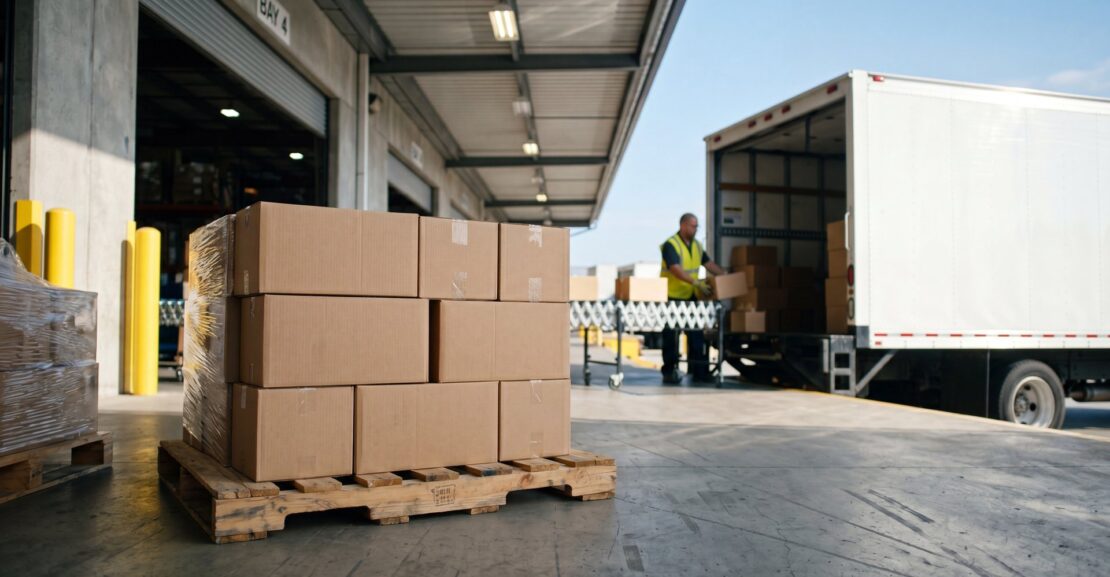
For shoppers, Black Friday and Cyber Monday are sales events. For retailers, distributors, delivery companies, and the fleets supporting them, they are something else entirely: a stress test of Black Friday delivery logistics.
Adobe’s Sept. 28, 2026, holiday forecast expects U.S. consumers to spend $47.5 billion online during Cyber Week (Thanksgiving through Cyber Monday). That includes $12.9 billion on Black Friday. Cyber Monday, at $15.1 billion, would be the first U.S. online shopping day above $15 billion.
Those purchases become physical inventory that has to move through warehouses, loading docks, and delivery routes to homes, stores, and pickup points, and in many cases it comes back through the network as returns.
That makes the job less about surviving one enormous shopping day and more about managing a demand curve.
Orders accelerate. Routes change. Drivers and dispatchers get stretched.
Trucks accumulate miles and operating hours faster than normal. Then, just as outbound pressure begins to ease, products start moving in the opposite direction.
The fleets that handle Cyber Week well plan for the whole cycle, from the first order surge to the returns wave that follows. Here are 10 steps for building that plan.
IN BRIEF
Black Friday delivery logistics is a multi-day demand curve, not a one-day spike. Adobe’s Sept. 28, 2026, forecast puts U.S. online spending during Cyber Week at $47.5 billion. Fleets are better placed when they plan capacity by day and route, keep spare vehicles and staff, and hold some surge capacity into December for returns.
1. Plan Black Friday Delivery Logistics Around the Demand Curve
Black Friday still commands attention, but holiday demand no longer switches on Friday morning and disappears Monday night. Promotions begin earlier, online purchasing stretches the event across multiple days, and fulfillment continues long after the transaction occurs.
For fleet managers, weekly averages can hide the problem. A fleet may have enough capacity to handle the total volume expected during a seven-day period while still being badly undersized for Tuesday afternoon. The real questions are when orders will hit the operation, where those orders need to go, and how quickly they must move.
That calls for planning capacity by day, route, and sometimes shift. Planners can start with predictable base demand, layer promotional volume on top of it, and then set thresholds for when additional routes, vehicles, drivers, or shifts become necessary.
Most importantly, leave room in the system. A fleet scheduled to 100% of its theoretical capacity has no practical capacity left. Nothing absorbs a late order, a vehicle problem, a driver call-out, or a slow route.
Maximum utilization looks efficient on a spreadsheet. During Cyber Week, flexibility can be more valuable.
2. Find the Real Capacity Bottleneck
When delivery volume increases, the natural response is often, “We need more trucks.” Sometimes that is true. Sometimes the truck is not the constraint at all.
Every additional vehicle requires someone to drive it. Every route requires inventory to be picked, staged, and loaded.
Drivers need dispatch support. Vehicles need somewhere to park, fuel, and receive service. Loading docks can only process so many trucks at once.
On a national scale, the United States Postal Service shows the principle. In an Oct. 22, 2026, release, USPS said it had added 673 package sorting machines over the past six years, 164 of them in 2026.
USPS also planned to hire a little more than 10,000 seasonal employees and noted that its volumes rise about 40% between Oct. 1 and Dec. 31. A regional fleet does not need to operate like USPS. The lesson is that transportation capacity depends on the entire operating system around the vehicle.
A useful exercise is to map the chain:
Vehicle → Driver → Loading → Dispatch → Route → Delivery → Return
Now ask what happens when volume increases 20%, 30%, or 50%. Wherever that chain breaks first is the actual capacity constraint. Adding three trucks to an operation that can only load one more route before 8 a.m. does not solve the morning problem.
3. Build the Surge Fleet Before It Is Needed
Most businesses do not need Cyber Week capacity 52 weeks a year. That creates an important distinction between permanent fleet requirements and temporary fleet requirements.
Think about capacity in three layers.
Core capacity handles normal, predictable business. Flexible capacity absorbs expected seasonal increases. Contingency capacity provides another layer for the things the forecast gets wrong.
The third category is easy to overlook. If expected demand requires 12 vehicles and exactly 12 are scheduled, the plan assumes every vehicle, driver, route, and loading window performs perfectly. Peak periods rarely cooperate that neatly.
For businesses that only need additional vehicles during seasonal surges, commercial truck rentals can provide that flexible middle layer without turning temporary demand into permanent fleet overhead.
Timing is the key. Waiting until volume has already exceeded the fleet means dispatch is solving today’s problem with today’s limited options, while securing surge capacity earlier turns that same decision into planning.
4. Staff for the Surge, Not the Average Day
Extra trucks do not create extra capacity if there is nobody available to drive, load, dispatch, or support them.
Staffing plans should therefore follow the same demand curve as the fleet plan. Look at expected volume by day and shift, then determine where additional driver hours, loading crews, warehouse support, or dispatch coverage may be necessary. If extended hours are part of the strategy, consider how those hours affect the people working the next shift as well.
Backup coverage matters, too. A normal Tuesday may be able to absorb one absence without much disruption. A Cyber Week Tuesday with every route already full may not.
Identify who can cover essential roles before someone calls out, not on the morning it happens.
Communication becomes increasingly important as the operation gets busier. Warehouse teams need to know when routes are closing. Dispatch needs to know when loading is behind.
Drivers need a clear process for reporting delays, vehicle problems, failed deliveries, and unexpected route conditions. A small communication gap that barely matters during normal operations can multiply across dozens of stops during a surge.
Adding people to the schedule is only part of the goal. The people, trucks, and workload should expand together.
5. Rework Routes for Peak Demand
A route that works beautifully in September may be the wrong route during Cyber Week.
Higher order volume can change delivery density. A neighborhood that normally produces six stops may suddenly produce 14. Commercial districts may receive more replenishment deliveries.
Residential routes can become denser as e-commerce orders increase. At the same time, a handful of distant stops can pull a vehicle away from an otherwise efficient cluster.
Dispatch should therefore treat normal routes as a starting point, not a rule. High-density stops may deserve their own routes, while long-distance deliveries may need to be separated rather than tacked onto already crowded runs. In some areas, a 16′ box truck may complete a dense route faster than a larger truck because maneuverability and access matter more than cubic capacity.
Late orders deserve their own rules as well. Continually adding stops to routes that have already been planned can slowly turn a workable schedule into an impossible one. Establish cutoff times and overflow procedures before the rush begins.
Then measure what actually happens. If a route expected to take six hours repeatedly takes eight, tomorrow’s dispatch plan should reflect reality rather than continue defending the forecast.
6. Schedule Preventive Maintenance Before the Surge
Along with extra mileage, more deliveries mean more starts, stops, liftgate cycles, and brake and tire wear, each one a chance for a small mechanical problem to become a larger one.
That makes preventive maintenance part of peak-capacity planning. Before the surge, review tires, brakes, fluids, batteries, lights, liftgates, cargo areas, and other equipment that will see heavier use. Refrigerated vehicles require their own readiness checks when temperature-controlled products are involved.
No maintenance program can make breakdowns impossible, but it can reduce avoidable failures during the period when losing one truck hurts most.
There is also a scheduling advantage. Pulling a truck for planned service before the peak is usually easier than losing it unexpectedly when every route is full.
Finish fleet readiness work before the surge fleet needs to run at full strength, not after demand starts climbing.
7. Give Dispatch Clear Triggers and Room to Adapt
Even an excellent Cyber Week forecast will be wrong somewhere. Actual order volume will differ from projections. Traffic will change.
A driver may call out, or a truck may need service. A customer may add an urgent delivery. Loading may fall behind.
The objective, then, is fast adaptation rather than perfect forecasting.
Before the surge, define the conditions that should trigger a change. What happens when volume exceeds forecast by 15%? When two routes are running an hour behind?
When a vehicle goes down? When the loading dock has a 45-minute backlog? When same-day orders exceed remaining route capacity?
Then decide what dispatch can do without waiting for a series of approvals. That might mean opening an overflow route, moving stops between vehicles, bringing in contingency capacity, changing a cutoff time, or postponing lower-priority deliveries.
A little unused capacity can become extremely valuable at this stage. A spare vehicle, available driver, overflow route, or later dispatch window may appear inefficient when everything is running perfectly, but when something goes wrong, that flexibility becomes operational insurance.
Good surge planning does not depend on predicting everything correctly. It depends on deciding in advance what dispatch will do when the prediction is wrong.
8. Plan Reverse Logistics for the Holiday Returns Wave
Eventually the outbound wave begins to settle. Then the fleet story reverses.
In its 2025 Retail Returns Landscape report (October 2025), the National Retail Federation estimated that 19.3% of online sales would be returned in 2025. Across all retail channels, returns were projected to total nearly $850 billion.
Rates vary by retailer and product category. For fleets, the implication is clear: a meaningful share of holiday merchandise will travel through the supply chain more than once.
We explored this idea in September in “The Return Trip: Why Reverse Logistics Deserves a Spot in Fleet Planning.” Cyber Week is where that argument becomes tangible.
Reverse logistics is the movement of goods back through the supply chain after a sale. Returned merchandise needs to be collected, transported, and inspected, then restocked, resold, recycled, or otherwise processed.
Increasingly, those movements are part of the logistics plan rather than a cleanup operation after the “real” work is finished. The complication is timing. Returns do not politely wait until outbound holiday deliveries are complete.
For a period, both flows exist simultaneously. Businesses that planned only for the outbound peak may find they solved only half the holiday logistics problem, with the second half still waiting.
9. Step Capacity Down Gradually
That overlap makes the post-Cyber Week capacity decision more important than it appears.
If temporary vehicles were brought in for the outbound surge, immediately removing all of them when Cyber Monday ends may create a second capacity problem. Instead, consider stepping capacity down as demand changes.
During Cyber Week, the fleet may be heavily weighted toward outbound deliveries. In early December, some surge capacity can be released while another portion remains available for continued holiday fulfillment.
As Christmas approaches and passes, the balance begins shifting again. Return movements become more important while outbound gift delivery eventually declines.
The right mix will differ by business, but the principle is broadly useful: temporary fleet capacity should follow the demand curve, not an arbitrary calendar date.
That might mean keeping two rental trucks for another week instead of four. It might mean repurposing vehicles from outbound routes to collection runs. It could mean consolidating returns geographically so vehicles are not traveling long distances to retrieve individual items.
What matters is that the step-down is intentional rather than automatic.
10. Turn Cyber Week Into Next Year’s Plan
When the rush finally ends, there is a temptation to move on. That wastes some of Cyber Week’s most valuable information.
Peak weeks reveal what the fleet can actually do under pressure. Compare forecast orders with actual orders, and review vehicle utilization, stops per route, overtime, downtime, and return volume. Identify when capacity was insufficient, but also look for periods when too much capacity was scheduled.
Talk to dispatchers, warehouse teams, and drivers while the experience is still fresh. Data may show that a route consistently ran late, while the driver can explain that one loading dock caused the delay every morning. A vehicle may appear underutilized in the mileage report because it spent the week serving a compact, high-density route exceptionally well.
The more useful review question is “What did Cyber Week teach us about our real capacity?”
Those lessons can influence next year’s staffing, rentals, fleet purchases, maintenance scheduling, routing, warehouse processes, and customer delivery promises. Reviewed this way, a difficult week produces useful intelligence for the year ahead.
Plan for the Full Cycle, From Surge to Returns
In fleet operations, “the day after” Black Friday is an entire sequence that starts well before Saturday.
Demand builds, orders surge, routes change, capacity tightens, and equipment works harder. Dispatch adapts.
Then merchandise begins flowing backward while holiday deliveries are still moving forward, and each stage creates different demands on the same people, vehicles, and infrastructure.
The strongest Black Friday delivery logistics plan accounts for that complete cycle. It looks beyond the number of trucks needed on the busiest day.
It also weighs the constraints around those trucks: the people who drive them, the condition of the equipment, and the room dispatch has when plans change. It plans for the capacity needed after the outbound peak has passed, too.
If seasonal demand could push a fleet past its comfortable capacity, planning temporary vehicles early can give dispatch more room to work. Suppose U Drive offers short-term commercial truck rentals from Glendale, Norwalk, Ontario, and Phoenix for businesses that need seasonal capacity, not a year-round fleet commitment. Availability can vary by location and season.
Every operation gets busy during Cyber Week. The real measure of fleet planning is how well it keeps moving when everything changes at once.
Talk with the Suppose U Drive team about Cyber Week capacity: call (800) 404-8800 or request a quote.
Frequently Asked Questions
How should fleets prepare for Black Friday delivery logistics?
Fleets should prepare for Black Friday delivery logistics by forecasting demand by day and route, not by weekly averages. Identify likely constraints involving vehicles, drivers, loading, dispatch, and maintenance, then establish thresholds for adding routes, vehicles, staff, or shifts. Building contingency capacity into the plan also gives dispatch more options when actual demand differs from the forecast.
When should businesses add temporary trucks for Cyber Week?
Businesses should arrange temporary trucks for Cyber Week before the regular fleet reaches its limit, ideally well before Thanksgiving. Businesses can estimate their core fleet capacity, determine how much additional volume is expected during the holiday surge, and add flexible capacity accordingly. Waiting until routes are already overloaded reduces the options available to dispatch.
How can fleets improve last-mile delivery during Black Friday and Cyber Week?
Fleets can improve last-mile delivery during Cyber Week by building routes around actual holiday order density instead of normal patterns. High-density areas may benefit from dedicated routes, while distant stops may need to be separated from otherwise efficient delivery clusters. Clear order cutoff times and predefined overflow routes can also help prevent individual routes from becoming overloaded.
What is reverse logistics, and why does it matter after Cyber Week?
Reverse logistics is the movement of goods back through the supply chain after a sale, mostly returns. It matters after Cyber Week because the National Retail Federation expected 19.3% of 2025 online sales to be returned, and those returns overlap outbound holiday deliveries. Planning for returns before the surge begins can help prevent a second capacity crunch in December.
Should businesses keep rental trucks after Cyber Monday?
Often, yes: businesses can keep some rental trucks after Cyber Monday and step them down as the demand curve changes. Returning them all at once can create a second capacity problem, because outbound holiday deliveries continue into December while return volume rises. Some vehicles used for peak deliveries may also be reassigned to return collection or other reverse-logistics routes.
What is the biggest bottleneck in Black Friday delivery logistics?
The biggest Black Friday delivery logistics bottleneck is often the weakest link around the trucks, such as drivers, loading docks, or dispatch. USPS, for example, said in October 2026 that it had added 673 package sorters over six years to get ready for the peak. Fleets can map each step and find where added volume breaks the chain first.
Resources / References
Adobe, “U.S. Holiday Shopping Season to Hit Record $275.1 Billion Online, Rising 6.7% YoY,” Sept. 28, 2026. https://news.adobe.com/news/2026/09/adobe-us-holiday-shopping-season-to-hit-record
National Retail Federation, “2025 Retail Returns Landscape,” Oct. 15, 2025. https://nrf.com/research/2025-retail-returns-landscape
U.S. Postal Service, “Postal Service Prepped to Deliver for 2026 Holiday Season,” Oct. 22, 2026. https://about.usps.com/newsroom/national-releases/2026/1022-postal-service-prepped-to-deliver-for-2026-holiday-season.htm