
When Every Jobsite Wants the Truck at 7 AM: The Scheduling Problem Behind Growth
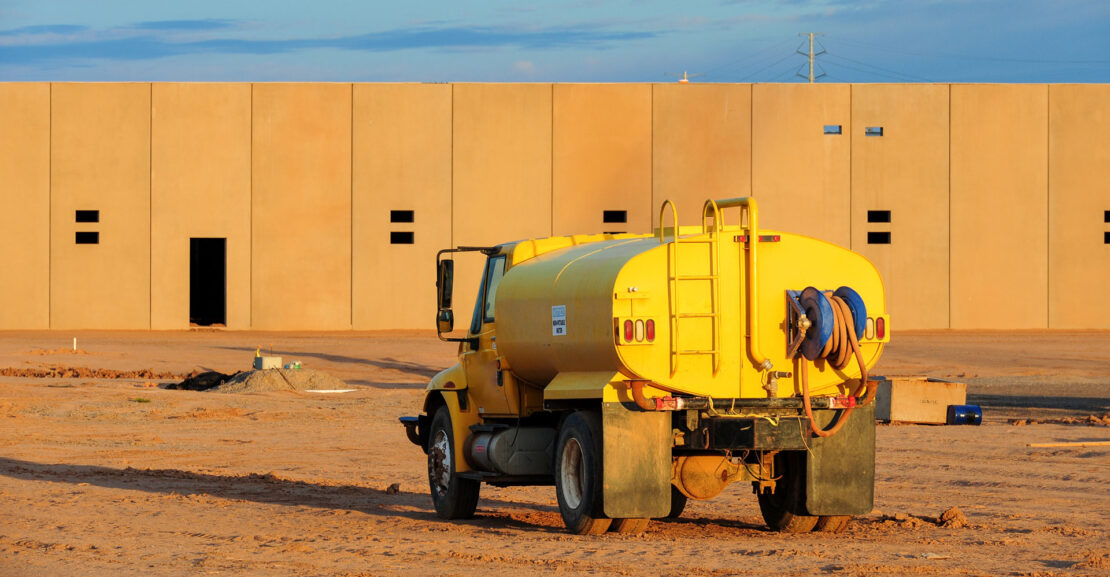
At 6:15 in the morning, the fleet can look perfectly adequate.
The trucks are in the yard. The crews are checking in. Materials are staged. Dispatch has the day mapped out. On paper, everything works.
Then 7:00 arrives.
One superintendent needs a truck in Mesa before the crew gets moving. Another project wants the same type of vehicle in Buckeye. A delivery in North Phoenix has a narrow receiving window. Someone needs equipment moved across town, a supplier is running late, and yesterday’s truck has not made it back to the yard yet.
There may be enough trucks to handle the day’s work. There just are not enough trucks to handle all of it at the same time.
That distinction is becoming increasingly important for construction fleet planning, particularly in Arizona. As projects multiply and contractors cover a wider geographic footprint, fleet pressure does not necessarily build evenly across the workday. It piles up during the hours when everyone wants to move.
And in construction, that usually means early.
Why Construction Fleet Planning Gets Harder as Arizona Grows
Phoenix continues to be a significant construction market, supported by infrastructure investment, industrial development, technology-related manufacturing, data centers, logistics facilities, utilities, housing, and the development that follows population growth.
But growth creates more than additional jobsites.
Every new project adds another set of delivery times, subcontractors, supervisors, equipment requirements, material movements, loading schedules, inspections, service calls, and last-minute changes. Add enough projects and the coordination problem can grow faster than the project count itself.
A contractor may go from running four projects to eight, for example, but the complexity does not simply double. Now more jobs are competing for the same drivers. More trucks need to leave the same yard. More deliveries share the same road network. And more project managers have a perfectly reasonable explanation for why their job needs to be first.
Arizona geography adds another layer. A truck that finishes a morning assignment in Chandler may technically be free for another job, but that does not mean it can immediately appear in Glendale or Surprise. Travel time, loading, unloading, traffic, and repositioning all consume usable fleet capacity. That growth is reshaping fleet demand across the Valley — our related piece, How Phoenix Construction and Development Are Driving Fleet Demand, looks at how that growth is changing what contractors need from their fleets.
That is where the difference between owning enough vehicles and having enough vehicles available at the right moment becomes important.
Why So Many Construction Jobs Need Trucks Early
Construction naturally creates concentrated demand in the morning because so much of the workday depends on sequence.
Materials need to arrive before installation begins. Tools and equipment have to be onsite when crews are ready for them. Deliveries may need to occur before access becomes congested. Some jobsites restrict receiving to specific hours. In other cases, a truck needs to unload and move out before another supplier arrives.
Arizona’s climate can compress the schedule further.
During hotter months, many construction activities move toward earlier starts so crews can accomplish more before afternoon temperatures peak. That makes operational sense, but it also concentrates transportation activity into the same cooler hours.
The result can be a strange contradiction. Extending or shifting the working day earlier does not necessarily spread fleet demand out. It can bring even more of it forward.
Suddenly, the most productive part of the day is also the busiest logistics window.
That is how 7 a.m. becomes crowded.
An Available Construction Truck May Not Actually Be Available
Fleet planning can become misleading when availability is treated as a yes-or-no question.
Is Truck 12 available Tuesday?
The schedule says yes.
Operationally, the answer may be more complicated.
The truck could be returning from Monday’s assignment. It might need to be loaded before departure. The driver assigned to it may be working elsewhere. The vehicle could require maintenance. It may be carrying equipment needed on another project, or it may simply be the wrong truck configuration for the job.
Location matters too.
A vehicle finishing a delivery 35 miles from the next assignment is not immediately available simply because the first job has ended.
This is why effective construction fleet planning has to consider usable time, not merely vehicle count.
A ten-truck fleet does not necessarily provide ten trucks at 7 a.m. Nor does it provide ten trucks throughout the rest of the day. Availability moves constantly as vehicles travel, load, unload, wait, refuel, undergo maintenance, and reposition.
The calendar may say “available.” Operations may say otherwise.
Growth Magnifies Small Fleet Scheduling Problems
Smaller operations can often coordinate trucks through experience and familiarity.
Someone knows that Truck 4 will probably be back by 10. Someone else knows the Tempe job usually unloads quickly. The dispatcher knows which superintendent can move a delivery back an hour without creating a problem.
That informal knowledge can work surprisingly well.
Until it doesn’t.
As the number of jobs increases, the cost of small scheduling errors begins to multiply. A late first delivery can leave a crew waiting. That delay pushes the truck’s second assignment back. Now another project is waiting, the driver’s hours are being consumed, and a vehicle expected at the yard for an afternoon run is still across town.
The same pattern appears when trucks are held “just in case.”
A project manager may want to keep a vehicle nearby because something could come up. From that project’s perspective, it makes sense. From the fleet’s perspective, an asset that might have completed two assignments is effectively reserved for one.
Labor shortages make these delays more expensive. National construction industry research continues to show that contractors have difficulty finding qualified workers and that workforce shortages contribute to project delays.
When skilled people are difficult to find, having a crew standing around waiting for a truck, material, or piece of equipment becomes an increasingly costly way to spend the morning.
Better Construction Fleet Planning Starts With the Time Window
The first question in fleet planning is often, “How many trucks do we need?”
A better question may be, “When do we need them?”
Mapping fleet demand by hour can reveal problems that disappear when looking only at daily or weekly utilization.
Start with the requested arrival time. Then work backward.
When does the truck need to leave the yard? How long will loading take? What does the route normally look like at that hour? How long will unloading realistically take once it reaches the site?
Then look forward.
Can that truck serve another project afterward? Will it need to return to the yard? Can it carry the next load without coming back? Is the next assignment geographically sensible?
The difference between a 30-minute unload and a 90-minute unload can reshape an entire morning.
So can a jobsite located on the wrong side of the Valley.
Mileage alone does not tell that story. Neither does the number of trucks sitting on an asset list.
Time does.
Not Every Jobsite Really Needs the Truck at 7 AM
One of the simplest ways to relieve fleet pressure is also one of the hardest: determine which scheduling requests are truly fixed.
Some are.
A concrete operation may have little flexibility. A specialized crew may be scheduled around a particular piece of equipment. Site access may be restricted. Materials may need to arrive before another phase can begin.
Those are genuine fixed windows.
Other requests are preferences.
Seven o’clock would be ideal, but 8:30 would not change production. A material delivery could arrive the previous afternoon. Equipment could be staged before the crew arrives. A pickup could move later without affecting the project schedule.
Separating fixed, preferred, and flexible assignments gives fleet managers room to work.
It can also expose a common problem: organizations often schedule around habit.
The truck has always arrived at 7, so 7 becomes the requested time. Eventually every project develops the same expectation, regardless of whether operations actually require it.
The goal is not to tell jobsites they cannot have what they need. It is to understand when they genuinely need it.
That small distinction can create surprising amounts of capacity.
Flexible Fleet Capacity Can Help Contractors Handle Peak Demand
Scheduling improvements can make an existing fleet work harder, but coordination has limits.
Sometimes several projects really do need trucks simultaneously.
The challenge then becomes deciding whether temporary demand should create a permanent fleet investment.
A practical approach is to think about capacity in layers.
The core fleet handles consistent, predictable work. Those are the trucks that have enough regular utilization to justify long-term ownership or leasing.
The next layer handles changing demand. Project launches, seasonal work, short-term contracts, simultaneous jobs, and periods when multiple schedules overlap can temporarily push requirements above normal fleet capacity.
A third layer provides contingency. Maintenance, unexpected downtime, schedule changes, and last-minute assignments all create situations where some breathing room can protect the day’s schedule.
This is where rental capacity can become useful.
For contractors throughout Arizona and the Southwest, Suppose U Drive can provide rental or leasing options when project demand temporarily outgrows available fleet capacity. Rather than permanently adding a vehicle every time the project calendar gets crowded, contractors can match additional trucks more closely to the period when they are actually needed.
The important part is knowing whether the problem is temporary or permanent.
Measure Fleet Utilization by Hours, Not Just Miles
Traditional utilization numbers can hide peak-demand problems.
Imagine a truck that operates only four hours per day. On paper, it may look dramatically underutilized.
But if those four hours happen to be from 6 a.m. to 10 a.m., precisely when every project wants that type of vehicle, the truck may be one of the most constrained assets in the fleet.
Useful construction fleet planning should therefore examine more than weekly mileage.
Look at departure times. Scheduled versus actual arrivals. Loading delays. Unloading and dwell time. Empty repositioning miles. Waiting time onsite. Missed or delayed assignments. Maintenance interruptions.
Most importantly, identify recurring periods when demand exceeds supply.
Those patterns tell a fleet manager something an odometer cannot.
They show when capacity matters.
The Best Construction Fleet May Be the One That Uses Time Better
Arizona growth will continue creating opportunities for contractors, suppliers, field teams, and the businesses that support them. In some operations, that growth will absolutely require more trucks.
But adding vehicles before understanding the scheduling problem can produce an expensive outcome: more trucks that are all busy at 7 a.m. and sitting still later in the day.
Strong construction fleet planning starts by understanding where demand overlaps, which delivery windows truly cannot move, how quickly vehicles can turn between assignments, and where flexible capacity can cover peaks without permanently increasing fleet size.
Because when every jobsite says it needs the truck at 7 a.m., the answer may not always be another truck.
Sometimes the answer is a better 7 a.m.
Frequently Asked Questions About Construction Fleet Planning
What is construction fleet planning?
Construction fleet planning is the process of coordinating vehicles around project schedules, locations, drivers, material requirements, maintenance, and changing workload. Effective planning considers not only how many vehicles are available, but when and where each vehicle can actually be used.
How can contractors improve fleet utilization?
Contractors can improve utilization by tracking demand by time of day, reducing unnecessary vehicle holding time, coordinating loading and unloading windows, grouping geographically compatible assignments, and identifying projects with flexible delivery schedules.
When does renting a construction truck make sense?
Rental trucks can make sense when fleet demand temporarily increases because of new projects, seasonal activity, overlapping schedules, maintenance downtime, or short-term contracts. They can provide additional capacity without requiring a permanent fleet addition.
Why is construction fleet planning especially important in Arizona?
Arizona contractors often manage projects across large geographic areas while working around heat, traffic, early jobsite schedules, and continued development throughout the Phoenix region and beyond. Those factors can concentrate vehicle demand into relatively narrow operating windows.