

How Phoenix Construction and Development Are Driving Fleet Demand
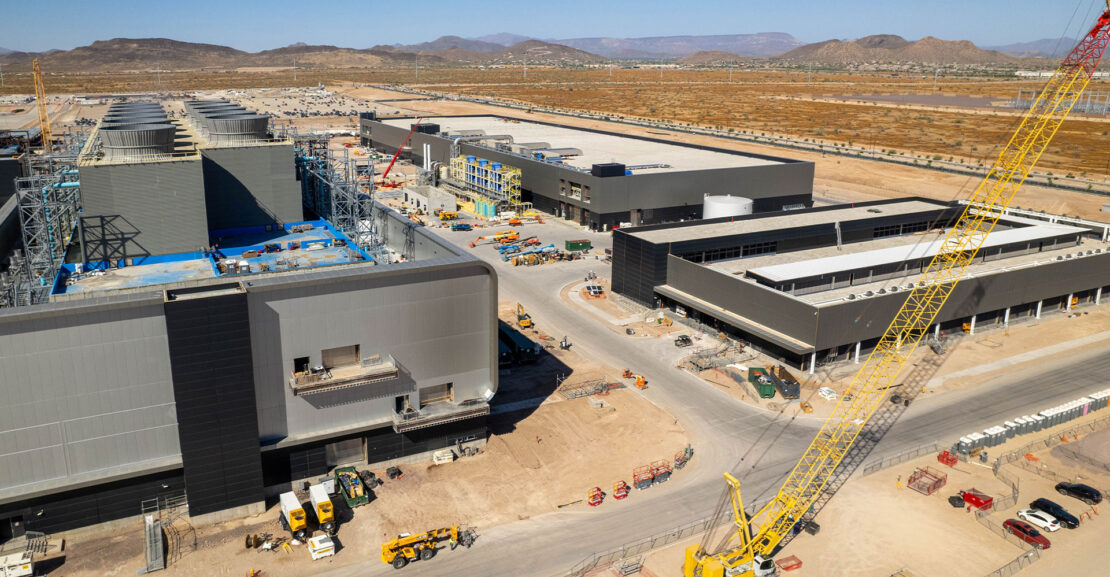
Phoenix does not grow in a straight line. It surges, it sprawls, it pivots, and it keeps building even when other markets catch their breath. That momentum is easy to spot from the freeway. What is harder to see is the operational layer underneath it, the daily movement of people, materials, tools, and equipment that makes all that development real.
That hidden layer is where fleet demand gets decided.
In metro Phoenix, construction and development are not simply creating more freight. They are changing the shape of demand. They are compressing schedules, stacking trades, tightening jobsite rules, and forcing contractors to treat equipment access as a living, shifting requirement rather than a fixed asset plan. If you work in this market, you already know the feeling. A project can look calm on paper, then turn chaotic on Tuesday.
This is what “Phoenix construction trucking” looks like in practice. Not a single lane. A constant shuffle.
The Phoenix project mix is built to keep fleets busy
Phoenix is not powered by one headline project type. It is powered by overlap. Civil work continues while industrial sites expand. Utility upgrades run alongside commercial development. Data center activity does not wait politely for housing to slow down. The result is a market where baseline demand stays high, and peaks show up fast.
Transportation and civil work creates a steady pull on capacity
Roadway and freeway work in the Valley has a way of behaving like an anchor tenant. It takes time, it takes staging, and it does not happen in a single burst. That matters because it keeps trucks working even when other segments soften.
It also changes how everyone else competes for equipment. When civil activity is steady, the market’s “spare” capacity shrinks. Then vertical construction ramps up, and suddenly the same pool of trucks has more places to be.
Industrial expansion changes the tempo of deliveries
Large industrial and advanced manufacturing work has a different rhythm than conventional commercial projects. The sites are bigger. The controls are tighter. The timelines are less forgiving. And the chain of vendors and subs is longer.
That creates two pressures at once. More deliveries, yes. But also more time-sensitive deliveries, with narrower windows and fewer second chances. When timing tightens, equipment becomes less interchangeable. A truck that arrives late is not just late. It may be useless for the day.
Data centers add a “fast, heavy, continuous” demand pattern
Data centers are often described as technical builds. They are. But the fleet implication is simpler. They concentrate heavy site work, significant concrete activity, and a long sequence of specialized trades. Then they layer on sustained service needs after turnover.
The key point is not hype. It is persistence. This category tends to create demand that does not clear quickly. It stacks on top of everything else Phoenix is already building.
Utilities and water projects keep the background demand humming
Some of the most equipment-intensive work is not glamorous. It is enabling work. Water, power, and supporting infrastructure. It is steady, it is required, and it often moves forward on its own clock.
In a market like Phoenix, those “quiet” projects matter because they reduce slack. Slack is what fleets used to rely on. Slack is what makes it possible to cover surprises without paying for them.
Why fleet demand in Phoenix feels sharper than in other growth metros
Phoenix is often grouped with other fast-growing regions, but the operational reality is different. The market is wide, spread out, and hot. It is also increasingly simultaneous. Multiple construction economies run at once, and they overlap more than they separate.
That overlap is why demand feels sharper. Not because every day is record-breaking, but because the market does not reset. When one segment slows, another continues. When one corridor is quiet, another is congested. The geography spreads the work, and the schedule compression concentrates it.
Phase overlap replaces phase sequencing
The old mental model of construction demand was cleaner. Site work, then vertical, then finish, then turnover. In Phoenix, those phases often happen across dozens of sites at the same time, and they collide.
Picture a Tuesday in Q3. Three civil projects along the I-10 corridor need haul trucks for grading. A tilt-up warehouse in Goodyear is pouring foundations. A data center pad in Mesa just got approved to start dirt work a week early. None of those projects are aware of each other. All of them are pulling from the same equipment pool, in the same week.
That collision shows up as unexpected calls for trucks. Not necessarily more trucks every day, but more “we need them now” moments.
The market has become less tolerant of buffer
Buffer used to exist. A few days of float between deliveries. A little room between trades. A window to reschedule. That cushion has thinned.
Consider the math on a missed concrete pour. The crew is on-site. The pump is booked. The inspector is scheduled. If the truck carrying forms or rebar is two hours late, none of that matters. You are not just paying for a late truck. You are paying for an idle crew, a wasted pump rental, and a rescheduled inspection. One delivery failure can cost ten times the delivery itself.
When buffer disappears, small disruptions become operational events. Equipment access becomes part of schedule risk, not just logistics.
Construction momentum is a planning problem, not a simple purchasing decision
In a market like Phoenix, the real question is not “Do we need trucks?” The question is “What kind, for which phase, with how much volatility, and for how long?” That is where fleet planning gets tricky, because construction demand is rarely stable in the way ownership assumptions prefer.
Owning can be smart. It can also be rigid. And rigidity is expensive when the market is volatile.
The equipment story is really a capacity-shape story
Fleet demand is not a single number. It is a mix. Dump capacity behaves differently than service bodies. Flatbeds behave differently than box trucks. Light-duty units have their own logic. And the mix shifts as projects move from dirt to structure to commissioning.
If your fleet is shaped for one phase, it may be mismatched for the next. In Phoenix, that mismatch shows up often because projects do not politely move in sequence. They overlap and they compress.
Heat and sprawl amplify the cost of being wrong
Phoenix adds two very real multipliers.
Heat raises the stakes of downtime. Reliability matters more when the environment punishes weak maintenance cycles. A truck that would “probably be fine” in a milder climate can become a liability when the summer workload hits.
Sprawl increases the penalty for inefficiency. Metro Phoenix stretches roughly 80 miles across at its widest points. A mispositioned truck does not cost you 20 minutes. It can cost you half a shift. Deadhead is not just annoying. It becomes a measurable drain.
The new normal: schedule compression and jobsite discipline
Phoenix is building bigger, faster, and with more coordination pressure. That does not mean every project is rushed. It means the market’s default posture leans toward acceleration, and acceleration is a demand multiplier for fleets.
It also increases jobsite discipline. More rules at the gate. More time slots. More documentation. More requirements for vehicles to be job-ready, compliant, and predictable.
When schedules compress, “availability” becomes the bottleneck
Many construction teams can solve materials problems. They can adjust manpower. They can work around a missing piece of equipment for a while.
What they cannot easily solve is the lack of a truck when the truck is the hinge point. When the mix is wrong or the timing breaks, the job does not move. That is why trucks can become a surprisingly strategic resource in a growth market. They keep the day from unraveling.
Jobsite rules turn flexibility into an advantage
As jobsites tighten controls, it becomes harder to “make do.” You cannot always swap in a different unit. You cannot always improvise. Sometimes you need the right configuration, the right paperwork, and the right timing, or you lose the window.
That is another reason fleet access matters. Not just raw capacity, but the ability to match requirements quickly.
What this means for Phoenix construction trucking demand right now
The demand story in Phoenix is not a single spike. It is a sustained pattern with sudden surges. And those surges are often driven by ordinary moments that become urgent in a compressed market.
A project pulls forward a phase. A site adds a second shift. A delivery schedule gets rearranged. A new corridor heats up. A utility tie-in moves from “next month” to “this week.” Those changes are normal. The problem is that they are no longer rare.
Demand surges are increasingly short-notice
Many fleets can plan for long arcs. What disrupts planning is the short-notice surge that lands on top of a steady baseline. That is when teams scramble. That is when equipment gets stretched thin. That is when a market feels tighter than the macro numbers suggest.
In Phoenix, those surges are common because the market is layered. Civil work, industrial buildouts, and commercial development can all pull on the same capacity pool at once.
The market rewards adaptable operators, not just big operators
There is a myth that scale is the only advantage. Scale helps, sure. But adaptability wins days. Adaptability keeps crews working. Adaptability keeps schedules intact.
The operators who do well in Phoenix tend to think in phases and volatility. They assume change. They plan for it emotionally and operationally. They also avoid the trap of treating equipment as a binary choice between owning everything or scrambling.
Where flexible truck access fits into the Phoenix reality
Phoenix is a market where commitment can be punished. Not because demand is weak, but because demand is uneven. The risk is not that work disappears overnight. The risk is that your equipment plan becomes mismatched to what the next quarter actually looks like.
Flexible truck access fits because it aligns with how Phoenix development behaves. It gives contractors and supporting trades a way to respond without turning every demand swing into a capital decision.
It also supports a more mature fleet posture, one that separates core needs from variable needs. Core capacity stays stable. Variable demand stays solvable.
That is not a trick. It is a practical response to a market that does not hold still.
How Suppose U Drive supports fast-changing Phoenix demand
This is where a Phoenix-based partner can make the difference between “we will be ready next week” and “we can keep the project moving today.” Suppose U Drive works with contractors, trades, and project teams who need trucks that match the work and the moment. Sometimes that is a short-term add for a sudden schedule pull-forward. Sometimes it is a month-to-month solution while a project stabilizes. Sometimes it is a longer-term lease structure that protects cash flow and keeps capacity dependable.
The point is not to overcomplicate it. Phoenix rewards practical equipment access. Clear terms. Responsive support. The ability to add capacity without turning it into a permanent bet. That flexibility is exactly what many project teams need when the build calendar stops behaving.
The Phoenix outlook: continued build, continued volatility, continued pressure on capacity
Phoenix has multiple engines. Transportation investment continues to shape corridors. Industrial growth continues to attract suppliers and supporting work. Data center activity adds heavy development pressure. Utility and water needs keep enabling projects moving forward. Housing and commercial development shift, but they rarely disappear.
So the demand outlook is not a clean curve. Expect more stacking. Expect more short-notice adds. Expect more moments where equipment access is what determines whether the plan survives the week.
Phoenix will keep building. The question is whether fleet strategies keep evolving with it.
Phoenix is teaching the industry a broader lesson about fleets
Phoenix is a vivid example, but the lesson travels.
Construction demand is becoming more interdependent. Schedules are becoming tighter. Jobsites are becoming more disciplined. Growth is becoming more layered. In that environment, fleet demand is not only about volume. It is about responsiveness. It is about mix. It is about being able to move when the market moves.
In Phoenix, that is not a theory. It is Tuesday.