

Why Fleet Downtime Is Still the Biggest Cost Fleets Underestimate
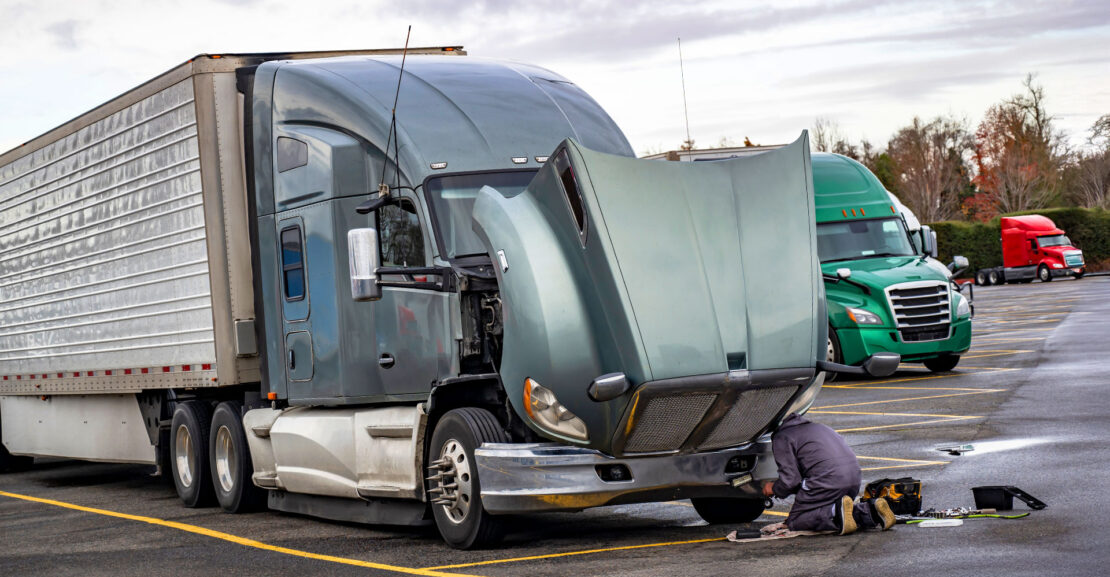
Fleet downtime is the cost everyone nods at and still underestimates. Not because leaders are careless, but because downtime behaves like a quiet tax that spreads across the business. It lands in places that do not say “maintenance” on the label, so it rarely gets treated like the financial risk it is.
If you run a fleet, you already know downtime is bad. You may even have dashboards and shop KPIs that look solid. Yet the gap persists. Fleets keep getting surprised by how expensive “a few days down” becomes, especially when those days land in the wrong week, on the wrong lane, with the wrong customer watching.
Downtime is the tax nobody votes for
Downtime is easy to blame on bad luck. A part is backordered. A bay is full. A driver calls in a fault that cannot be ignored. The narrative becomes, “This is what happens.” That framing feels realistic. It is also how downtime stays under-managed.
Why downtime gets budgeted like weather
Fuel is a budget line. Insurance is a budget line. Even tires have a rhythm. Downtime often gets treated like a storm system that moves through when it wants.
But downtime is not weather. It is operational exposure. And exposure can be reduced, priced more honestly, and buffered with better continuity planning. Fleets that do this do not magically avoid repairs. They reduce the disruption that makes repairs so expensive.
The invoice story is comforting, and incomplete
There is a reason downtime gets reduced to repair spend. Invoices are legible. They sit in one place, coded to one category, and tied to a single event. Leaders can see them, review them, question them, and approve them.
Downtime’s real cost is messier. It behaves like a fog that drifts across departments.
Where fleet downtime costs actually land
The repair order captures what happened in the shop. It does not capture what happened to the day.
A unit goes down and suddenly operations is rewriting routes. Dispatch is juggling capacity. Customer service is smoothing over missed appointments. Sales is making quiet concessions to protect the relationship. Payroll absorbs overtime and unproductive driver time. Planning absorbs the opportunity cost of work you could not take because your network felt fragile that week.
None of that rolls up neatly into the same bucket as the repair. So the organization sees the receipt and misses the bill.
The compounding effect is the real villain
Most fleets can survive a truck being down. The bigger risk is what that downtime triggers next. Downtime gets expensive when it destabilizes the system around the truck.
This is why “one unit down” can turn into “a week of disruption” even when the repair is straightforward.
Downtime is rarely one event. It is a chain reaction.
The first-order problem is simple: the truck is unavailable.
The second-order problems are where the money goes:
- loads get rebooked at worse rates
- routes get split, adding miles and hours
- drivers lose productive time, then require overtime to recover
- planners build buffers “just in case,” raising cost permanently
- performance slips and the customer notices
Then comes the third-order problem: behavior changes. Teams become reactive. They start operating in recovery mode, and recovery mode is expensive. It rewards shortcuts, rush fees, last-minute rentals, and decisions that prioritize today’s fire over next month’s stability.
Fleets underestimate downtime because they price the first-order problem and forget the rest of the dominoes.
Utilization turns small disruptions into big numbers
Utilization often gets treated like a performance indicator. It is also a multiplier. High utilization makes downtime more expensive because there is less slack in the system. Low utilization makes downtime easier to absorb, until the market tightens and that slack disappears.
This is why two fleets can experience the same repair event and feel completely different levels of pain.
A small utilization dip is a big annual number
A few lost days per unit per year can sound survivable. But annualize it across the fleet and it stops sounding small. Those lost days become lost outputs. Those lost outputs become missed revenue, missed service, or both.
More importantly, the loss is not evenly distributed. Downtime tends to cluster. It hits when the fleet is already stretched, when peaks are peaking, when contract expectations are highest. That is when the multiplier kicks in.
Leaders often ask, “How bad can one day be?” The more useful question is, “How many downstream decisions does one day force, and what do those decisions cost?”
Modern downtime is less about fixing and more about returning to service
There is a subtle shift many fleets feel but do not always name. Downtime is not always driven by repair complexity. It is driven by the time between identifying a problem and returning a unit to productive work.
That gap is where the modern constraints live.
Why time to return matters more than time to wrench
A technician shortage in one market can stretch timelines. A parts delay can extend the outage. Vendor backlog can turn a simple fix into a scheduling problem. Approval cycles can slow decisions when budgets are tight. Compliance events can introduce surprises that do not wait for your calendar.
So fleets can do everything “right” in theory and still get hurt in practice. The system around maintenance has more friction than it used to. When that friction meets high utilization, downtime stops being a nuisance and starts being a financial drag.
This is why downtime can feel worse now even for sophisticated operators. Not because they forgot maintenance, but because recovery is slower and variance is more punishing.
The accountability problem: downtime lives between owners
Downtime is cross-functional by nature. That should make it easier to manage. In reality, it often makes it harder because responsibility gets diluted.
Maintenance is expected to fix things. Operations is expected to deliver the day. Finance is expected to control cost. Each group sees a different slice of the same problem.
When everyone owns downtime, nobody owns downtime
If downtime is labeled a shop problem, it gets solved with shop tools: PM schedules, vendor negotiations, technician hiring, and parts strategy. Those matter, but they do not fully address the cost of disruption.
The disruption lives in the handoffs between departments. It lives in the days when operations has no good options. It lives in the scramble for replacement capacity. It lives in the moments when customer expectations collide with equipment reality.
Downtime improves when it is treated as a shared business KPI, not a department storyline. That is when leaders stop asking “What did maintenance do?” and start asking, “What is the business exposed to, and how do we reduce that exposure?”
Downtime is a customer experience problem in disguise
Most fleets talk about service reliability as an operational goal. Customers experience it as a trust signal. When reliability slips, customers do not always complain loudly. They adjust quietly.
They diversify. They add backup providers. They shorten leash lengths. They demand tighter SLAs. They negotiate harder at renewal.
Reliability is already a pricing lever
Downtime forces choices that rarely show up on a repair order:
- expediting that eats margin
- concessions offered to preserve the relationship
- “make-good” moves that train customers to expect compensation for disruptions
- conservative planning that reduces your ability to say yes to profitable work
Over time, that turns reliability into leverage. Fleets that deliver reliably can protect pricing and terms. Fleets that wobble get squeezed. This is one reason downtime is underestimated. It does not always look like a cost increase. Sometimes it looks like a revenue ceiling.
The strategic mistake: treating backup capacity like “extra”
Many fleets still treat standby capacity as waste. The logic is understandable. Idle equipment feels like money parked. But in high-variance environments, standby capacity is not laziness. It is resilience.
The problem is not that fleets dislike backup plans. The problem is that they often treat backup plans as ad hoc.
Standby capacity that earns its keep
There is a difference between “calling around for a rental” and having a continuity plan.
Ad hoc rentals happen when downtime hits and you are forced to source under pressure. That is when you accept the wrong spec, the wrong terms, the wrong location, and the wrong timeline. It becomes expensive, and it feels chaotic, which reinforces the belief that rentals are a last resort.
A continuity plan treats backup capacity as a deliberate business tool. It assumes variance. It protects the schedule. It prevents the domino effect from starting.
The best fleets do not carry endless extra capacity. They carry access to capacity. That distinction matters.
Why maintenance-supported rentals change the downtime conversation
This is where rentals become more than a seasonal tactic. In the right structure, rentals are a buffer that reduces the compounding cost of downtime. They protect uptime when the environment is unpredictable and recovery time is uncertain.
Continuity beats scrambling
A maintenance-supported rental approach helps fleets keep work moving during:
- planned PM windows when you cannot afford to take units offline
- unplanned downtime events that would otherwise break the day
- contract ramps where purchased capacity cannot arrive fast enough
- peak seasons where there is no slack for surprises
It changes the decision posture. Instead of asking, “Can we survive this outage?” the fleet asks, “How fast can we replace productive capacity so the schedule stays intact?”
That is a financial question. It is also a leadership question.
Where maintenance-supported rentals matter most
Some operations can absorb downtime because their schedules are flexible. Many cannot. Maintenance-supported rentals tend to deliver the most value when:
- utilization is high and missed days cascade quickly
- customers have tight delivery expectations and low tolerance for variance
- the fleet includes aging units where failure variability rises
- the business is growing, shifting lanes, or entering new contracts
In those environments, downtime is not a technical event. It is a profitability event. Rentals do not eliminate repairs, but they can reduce the most expensive part of downtime: disruption.
What the best fleets do differently
Downtime will always exist. The difference is how fleets think about it. Average fleets treat downtime as a maintenance story. Strong fleets treat it as business exposure with financial consequences and commercial implications.
That mindset changes planning, budgeting, and the willingness to build continuity into the operating model.
Strong fleets control their exposure to downtime
They price downtime honestly, including second-order costs.
They accept that variance is normal, not exceptional.
They protect customer commitments with access to replacement capacity.
They treat uptime as an asset that deserves investment, not a slogan.
And when downtime hits, they do not panic. They execute. That is the difference between a fleet that absorbs disruption calmly and a fleet that keeps paying for the same chaos over and over again.
The week goes better when you plan for reality
If downtime were only a repair bill, most fleets would have solved it by now. The problem is the spillover. The phone calls. The reshuffled routes. The “we’ll make it work” decisions that keep the day moving but quietly raise your cost structure.
That is why fleet downtime costs still get underestimated. They do not show up in one place, and they rarely arrive one at a time. They stack. They spread. And they usually hit when the operation has the least slack to give.
The good news is this is not mysterious. When you start treating uptime like a financial asset, the conversation changes. You stop asking who is at fault and start asking what the business is exposed to, and how fast you can recover when something breaks.
That is what Suppose U Drive is built around. When a unit goes down or you need coverage during planned maintenance, our maintenance-supported rentals are designed to keep your schedule intact and get you back to productive capacity fast.
Because downtime is going to happen. The difference is whether it becomes a disruption you absorb calmly, or a cascade you pay for all week.