

The Wall of Dust: How Arizona Storms Turn Dispatch Into a Safety Strategy
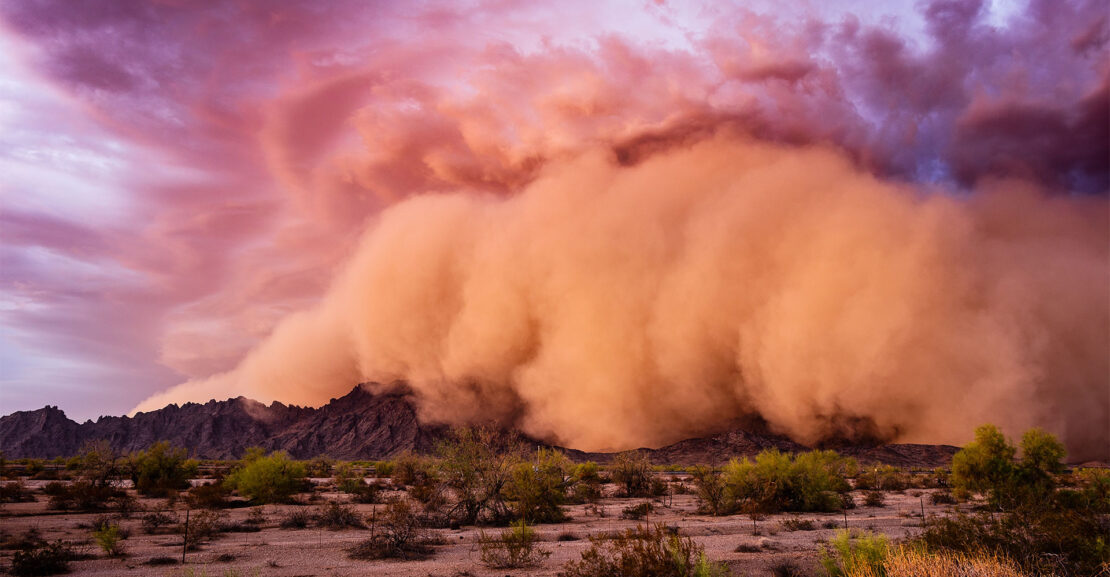
Arizona dust storms have a way of exposing the difference between a fleet that reacts to weather and one that has learned to think through it.
The distinction becomes clear when the horizon starts to disappear.
A driver may still be moving. The route may technically remain open. A customer may still be expecting the truck. Yet the operating environment has already changed. Visibility is beginning to fall, traffic behavior is becoming less predictable, and a decision that looked routine 10 minutes earlier now carries a very different level of risk.
At that point, the weather is no longer a background condition. It becomes part of the dispatch strategy.
That is what makes Arizona dust storms such an interesting operational test. They do not always provide the clean warning fleets would prefer. They move quickly, affect routes unevenly, and create situations in which keeping a truck moving may no longer be the clearest sign of good performance.
For fleets operating across Phoenix, the I-10 corridor, agricultural areas, open desert, and fast-growing construction zones, dust storm driving safety is less about memorizing a set of roadside steps and more about how an organization makes decisions when the conditions refuse to stay predictable.
Arizona Dust Storms Challenge More Than Visibility
The most obvious danger in a dust storm is the loss of visibility. That is also the easiest part to understand.
What makes these events more complicated is everything that happens around that loss of visibility.
A fast-moving wall of dust can alter traffic patterns almost immediately. Some drivers brake hard. Others continue at speeds that no longer match the conditions. Vehicles may pull over in places that create new hazards. Wind can move debris across the roadway, affect high-profile vehicles, and turn a manageable route into a corridor with very little margin for error.
Then the dust may be followed by rain.
That matters because the operational problem does not necessarily end when the road becomes visible again. Flash flooding, standing water, collisions, closures, backed-up traffic, damaged signals, and debris may continue to affect the route long after the most dramatic part of the storm has passed.
This is one reason Arizona weather can be difficult to manage from a distance. A dispatcher may see an alert covering a broad area, while the driver sees a highly localized and rapidly changing situation. One vehicle may encounter severe dust while another, only several miles away, remains under clear skies.
Both reports can be accurate.
The challenge is not simply gathering more information. It is knowing when the available information is sufficient to change the plan.
Dispatch Has Become Part of the Fleet Safety System
Dispatch has traditionally been associated with coordination, timing, utilization, customer communication, and route efficiency. Those responsibilities remain central. But in weather-sensitive operations, dispatch also becomes part of the safety system.
The dispatcher often sees a wider operational picture than the driver.
A driver sees the roadway ahead, the traffic nearby, and the immediate condition of the vehicle. Dispatch may see several routes at once, the direction of the storm, developing traffic issues, customer constraints, available staging locations, and the position of every vehicle in the affected area.
Neither perspective is complete on its own.
The strongest operations do not treat dispatch as a command center that overrides field judgment. They treat it as a point of coordination where multiple pieces of imperfect information can be turned into a better decision.
That distinction is important.
Weather events are rarely managed well through rigid control. They are managed through shared awareness, clear authority, and trust in the people closest to the risk.
The Real Question Is Not Whether the Truck Can Continue
In a routine operating environment, the main question is often practical: Can the truck complete the route?
During a dust storm, that question may be too narrow.
A truck may still be physically capable of moving. The driver may still have legal hours available. The highway may not yet be closed. Traffic may still appear to be flowing.
None of those facts necessarily means continuing is the right decision.
A more useful question is whether the route still makes sense under the conditions that now exist.
That changes the discussion from capability to judgment.
Can the driver continue? Possibly.
Should the operation continue to expect the same arrival time, route plan, and productivity level? That is a different matter.
This is where thoughtful dispatching becomes visible. The strongest decision may be a reroute. It may be a temporary hold. It may be keeping the vehicle at the customer site a little longer. It may be telling the driver to stop before reaching the affected corridor.
Sometimes the most strategic move is to remove movement as the immediate goal.
Weather Reveals the Culture Behind the Policy
Most commercial fleets already have severe-weather policies. The larger question is how those policies behave under pressure.
A company may state that safety comes first. The real test arrives when a truck is running late, a major customer is waiting, and the driver reports that visibility is deteriorating.
That is when culture becomes more important than wording.
Drivers quickly learn whether stopping is genuinely supported or merely permitted in theory. They notice whether weather delays are treated as reasonable operational decisions or as failures that need to be defended later.
They also notice the language dispatch uses.
A statement such as “Use your best judgment” may sound supportive, but it can still leave the driver carrying the full weight of the schedule, customer expectation, and safety decision.
A stronger culture makes the operational priority clear before the situation becomes urgent. It creates enough trust that the driver does not need to wonder whether caution will be second-guessed after the storm passes.
That confidence matters because weather decisions are often made before conditions become obviously dangerous.
By the time everyone agrees that the route is unsafe, the safest options may already be disappearing.
The Most Valuable Decision Often Happens Early
Dust storms reward early decisions.
The earlier dispatch recognizes that a route may be affected, the more choices remain available. A truck can be held at a terminal. A driver can remain at a customer location. A safer staging area can be identified. A delivery window can be adjusted before the delay becomes a conflict.
Once the vehicle reaches the edge of the storm, those choices narrow quickly.
This creates an important operational tension. Acting early can feel unnecessarily cautious because the worst conditions have not arrived yet. Waiting can feel more efficient because the route may remain clear.
But weather strategy is rarely about proving that a storm will become severe. It is about recognizing when the potential cost of waiting has become greater than the inconvenience of acting.
That is not an easy judgment, especially in a business built around timing and movement.
It is still a necessary one.
Rerouting Can Create the Illusion of Control
When a major corridor becomes threatened, rerouting often feels like the most active and productive response.
Sometimes it is.
But rerouting can also create the illusion that any movement away from the problem is automatically safer.
Arizona’s road network does not always offer a clean alternative. A secondary road may have limited shoulders, more exposure to open land, flood-prone crossings, truck restrictions, construction, or fewer safe places for a commercial vehicle to stop.
A route that appears clear may also be moving toward the same weather system from a different direction.
This is why a strong dispatch strategy does not treat rerouting as an automatic success. It considers the quality of the alternate route, not merely its availability.
The best decision may still be to wait.
That can be difficult for operations teams because waiting feels passive. In reality, holding a truck in a known safe location may be a highly active decision. It preserves control over the vehicle, protects the driver from entering a less predictable corridor, and gives the organization time to see how the event develops.
Not every problem needs to be solved through motion.
Customer Expectations Influence Safety More Than They Appear To
Customer communication is often discussed as a service function. During severe weather, it also affects driver behavior.
A driver who believes the customer still expects the original arrival time may be more inclined to continue toward deteriorating conditions. A dispatcher who has not yet communicated the delay may feel pressure to keep the route alive a little longer.
That pressure may never be stated directly. It can still shape the decision.
Fleets that communicate early create room for better judgment. They make it clear that the operation has already recognized the disruption and adjusted expectations accordingly.
This is not about overreacting to every weather alert. It is about preventing the delivery schedule from becoming the strongest voice in the conversation.
Customers generally understand that Arizona weather can interrupt transportation. What creates frustration is uncertainty, silence, or a promise that keeps moving.
A clear update is often more valuable than an optimistic arrival estimate.
Technology Helps, but It Does Not Remove Uncertainty
Modern fleets have more weather and traffic information than ever before.
Dispatchers can review radar, public warnings, traffic cameras, road closures, telematics, driver locations, and mobile alerts. Arizona has also invested in road-weather systems designed to detect blowing dust and adjust traffic controls in vulnerable areas.
All of this improves awareness.
It does not eliminate uncertainty.
Weather data may show where a storm is located, but not exactly how a particular vehicle will experience it. A traffic map may show congestion without revealing how quickly visibility is changing. A camera may offer a clear image moments before the dust reaches the roadway.
The driver remains an essential source of information.
That means the most resilient fleets avoid treating technology as a substitute for field judgment. They use it to add context, confirm patterns, and improve timing.
The best picture usually comes from combining what the systems report with what the driver is seeing in real time.
The Restart Decision Deserves as Much Attention as the Stop
Stopping operations during severe dust may be the obvious part. Restarting can be more complicated.
Once visibility begins to improve, the pressure to recover lost time returns quickly. The storm appears to be moving away. Drivers are ready. Customers want new arrival estimates. Dispatch wants the route back on schedule.
Yet the roadway may still be affected.
Traffic can remain backed up for miles. Collisions may block lanes. Flooding can develop after the dust passes. Debris may be scattered across the road. Drivers may also be dealing with fatigue or reduced visibility from dust-coated mirrors, lights, windshields, and camera systems.
The end of the warning does not always mark the end of the operational impact.
A thoughtful restart considers what the storm left behind.
This is another area where dispatch adds value. The decision is no longer based only on whether the driver can see. It includes road access, traffic movement, secondary hazards, remaining route demands, customer availability, fuel, and hours.
Resuming too quickly can turn one weather interruption into a second problem.
Every Storm Leaves Behind Operational Knowledge
Weather events are disruptive, but they are also revealing.
They show which routes become vulnerable first. They identify customer locations that work well as temporary staging points. They expose gaps in communication. They show whether dispatch received useful information early enough and whether drivers felt supported in making conservative decisions.
Those lessons can become part of the operation.
Over time, fleets may develop a clearer picture of high-risk corridors, common dust patterns, safe stopping areas, and the kinds of customer communication that work best. They may also discover where policy and practice do not fully align.
The value of a post-event review is not in producing another lengthy procedure.
It is in improving judgment the next time the horizon begins to change.
Dust Storm Safety Is Really About Decision Quality
Arizona dust storms are dramatic, but the strongest fleet response is rarely dramatic.
It is usually a series of measured decisions made early enough to preserve options.
A dispatcher notices the pattern. A driver reports changing conditions. A route is reconsidered. A customer is informed. A truck is held where it is safe instead of being pushed toward an uncertain corridor.
None of those actions may appear extraordinary.
Together, they define a mature operation.
Dust storm driving safety will always involve the driver’s skill and the condition of the vehicle. But it also reflects how the fleet thinks about time, pressure, uncertainty, and responsibility.
The best dispatchers know how to move equipment efficiently. They also understand that efficiency changes meaning when visibility disappears.
Sometimes success is measured in miles completed.
Sometimes it is measured by the decision not to enter the wall of dust.
FAQs
Why are Arizona dust storms especially challenging for commercial fleets?
They can develop quickly, affect routes unevenly, reduce visibility with little warning, and create secondary problems such as traffic collisions, closures, high winds, debris, and flash flooding.
Should fleets reroute trucks around dust storms?
Rerouting can be effective when the alternate road is clearly safer and suitable for the vehicle. In some cases, holding the truck in a secure location is the better operational decision.
What role should dispatch play during a dust storm?
Dispatch helps combine weather information, traffic conditions, vehicle locations, customer demands, and driver reports. Its role is to support sound decisions, reduce schedule pressure, and coordinate the broader response.
Why is early customer communication important during severe weather?
It reduces pressure on both the driver and dispatcher to preserve an arrival time that may no longer be realistic. It also gives the customer a clearer understanding of the delay.
When should a route resume after a dust storm?
A route can resume when visibility has improved and the roadway, traffic conditions, secondary hazards, vehicle condition, and remaining trip requirements have been assessed.