

Refrigerated Truck Rentals and the Mid-Summer Supply Chain Surge
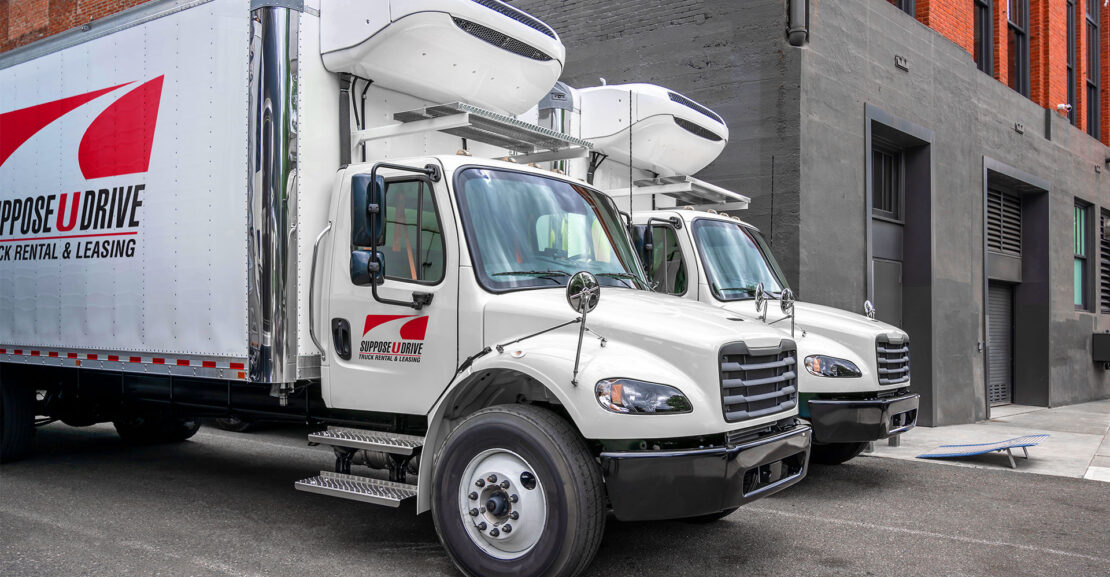
With reefer national average spot rates currently at $2.34 per mile, logistics managers are watching transportation budgets carefully as the summer peak season approaches. For an industry accustomed to seasonal fluctuations, the challenge isn’t just about current rates. It’s about preparing for the inevitable mid-summer supply chain surge.
Mid-summer creates the perfect storm. Peak produce season floods the market with time-sensitive cargo just as extreme heat accelerates spoilage risks. Meanwhile, the hospitality surge from music festivals to outdoor events creates additional demand spikes that push available reefer capacity to its breaking point. Current national reefer capacity shows tight conditions at 8.8 loads-to-truck compared to recent averages, while regional variations show reefer rates highest in the West at $2.48 per mile.
The result? Fixed fleets that work perfectly in spring suddenly can’t handle summer’s peak demands.
Smart logistics operations are solving this challenge with a strategic shift to refrigerated truck rentals. These flexible solutions address the three core summer challenges: capacity shortfalls, cost volatility, and operational reliability when failure isn’t an option. Rather than absorbing the crushing overhead of year-round fleet expansion, forward-thinking companies are partnering with rental providers who understand that summer success requires precision timing, reliable equipment, and the agility to scale exactly when and where peak demand strikes.
KEY TAKEAWAYS
- Summer creates a perfect storm for logistics: Peak produce season + extreme heat + festival/event demand = capacity crunch that breaks traditional fleet models
- Refrigerated truck rentals solve three critical problems: Provide scalability without long-term commitment, cost control through pay-as-you-use pricing, and reliable technology/maintenance when breakdowns are catastrophic
- Early planning is essential for success: Book rentals by late spring to avoid premium pricing and capacity shortages, because waiting until midsummer means paying inflated rates for limited equipment availability
The Summer Surge: When Supply Chains Hit Peak Stress
Understanding why traditional logistics models break down in summer requires examining both the scale of seasonal demand and the convergence of multiple pressure points that create unprecedented strain on refrigerated capacity.
The Numbers Tell the Story
The data reveals why summer breaks supply chains. The short-term rental segment dominates with a market share of 45%, followed by long-term rentals at 35%, and full-service leases at 20%. The demand for short-term rentals is driven by seasonal fluctuations and the need for flexibility in supply chain logistics. This isn’t coincidence. It’s businesses responding to predictable seasonal chaos.
Southern California’s produce volume has gained steam, with refrigerated volume being the highest they’ve been all year out of the Los Angeles market. Meanwhile, industry analysts track a critical indicator: the spot rate increase between April and July typically indicates the freight market’s trend for the rest of the year. An increase below 5% could indicate continued softness on a seasonally adjusted basis, while an increase exceeding 8% could indicate significant tightening.
Three Converging Pressures
Agriculture Peak: Fresh agricultural products require continuous cold chain from harvest to consumption. Any breaks in this chain render the entire cold chain useless. Summer harvest season doesn’t negotiate. Berries, melons, and stone fruits hit peak ripeness simultaneously throughout the summer months, flooding the market with cargo that has zero tolerance for delays.
Heat Acceleration: Temperature is the single most important environmental factor affecting the deterioration rate and postharvest lifetime. Higher temperatures don’t just make drivers uncomfortable—they accelerate spoilage exponentially, forcing businesses to increase delivery frequency and accept smaller load sizes to maintain product integrity.
Event Economy: Festival tourism plays a crucial role in driving hotel bookings, boosting occupancy rates, and generating powerful ripple effects across the tourism industry. From major music festivals drawing hundreds of thousands of attendees to countless local events throughout the summer, these gatherings trigger spikes in demand, elevate nightly rates, and create temporary jobs across various sectors. This includes transportation services, food vendors, event management teams, and marketing providers.
Why Traditional Fleets Fail in Summer
The limitations of conventional fleet models become glaringly apparent when summer’s triple threat of harvest peaks, extreme heat, and event-driven demand converges. These failures aren’t operational oversights. They’re structural limitations that no amount of planning can overcome.
Capacity Bottlenecks
Traditional fleet models crumble under summer’s relentless pressure. Current market data shows national reefer capacity at 8.8 loads-to-truck, indicating strong demand for available equipment. This tightness in capacity signals that demand for refrigerated capacity is dramatically outstripping supply.
Fixed fleets face an impossible equation: build for peak demand and watch assets sit idle nine months of the year, or size for average demand and fail when it matters most. Geographic misalignment compounds the problem. Equipment optimized for regular routes suddenly finds itself in the wrong markets when seasonal demand shifts to produce regions and festival destinations.
Cost Pressures
The financial reality is challenging. Current reefer freight rates are averaging $2.34 per mile nationally, but regional variations tell a different story. Reefer rates are highest in the West, averaging $2.48 per mile, while the Northeast sees lower rates at $1.89 per mile. Peak lanes and seasonal routes command even higher premiums.
High-temperature operations stress every component of refrigerated equipment. Cooling systems work overtime, maintenance intervals compress, and breakdown risks multiply precisely when downtime costs the most. Fleet managers watch operating costs spike just as revenue pressure intensifies.
The Flexibility Gap
Current load-to-truck capacity shows reefer demand is highest in the Southwestern states, while the Midwest and Northeastern states have lower demand ratios. Seasonal tightness historically concentrates in Southern California, Georgia, Houston, Dallas, and Memphis markets. These are exactly where summer demand concentrates. Traditional fleets simply cannot pivot fast enough.
The inability to scale up quickly during peak season and scale down efficiently afterward creates a utilization nightmare. Companies either over-invest in assets that generate negative ROI during off-peak months or under-invest and lose market opportunities during critical summer windows. This peak season versus off-season mismatch has broken countless fleet economics, forcing logistics managers to choose between capital efficiency and operational reliability.
The Refrigerated Rental Solution
Smart logistics managers are discovering that rental partnerships don’t just solve capacity problems. They transform the entire economics of seasonal operations by providing scalability, financial flexibility, and technology access that owned fleets simply cannot match.
Immediate Scalability
Rentals are particularly valuable during peak periods, temporary expansions, and unplanned business surges. These are exactly the scenarios that break traditional fleet models. On-demand capacity eliminates the long-term commitment trap, allowing companies to match equipment precisely to actual demand rather than forecasts.
Consider a mid-sized produce distributor in California’s Central Valley who added ten reefer rentals to their usual fleet during peak harvest season. This temporary capacity increase allowed them to run three shifts around the clock, reduce pressure on internal resources, and avoid spoilage during one of the hottest months on record. All of this was accomplished without the crushing overhead of year-round asset ownership.
Financial Intelligence
Cost-effectiveness and flexibility make rental services attractive for businesses looking to scale operations without the long-term vehicle ownership commitment that destroys capital efficiency. The pay-only-for-use model eliminates the fundamental inefficiency of year-round asset ownership for seasonal demand.
Where traditional fleets force companies to choose between under-capacity and over-investment, rentals provide a third option: right-sized capacity with predictable budgeting during volatile periods. No surprise maintenance costs, no depreciation concerns, no insurance complications. Just transparent, usage-based pricing that aligns costs directly with revenue opportunities.
Technology & Reliability Advantage
Modern rental fleets come equipped with telematics and GPS tracking systems that provide real-time location tracking and temperature monitoring. These are capabilities that many owned fleets lack. Reefer units are equipped with the latest safety and compliance features, meeting Food Safety Modernization Act guidelines without requiring capital investment in equipment upgrades.
Professional maintenance programs ensure higher uptime during critical periods. While owned fleets stress maintenance teams during peak season, rental providers specialize in keeping equipment operational when breakdowns aren’t just inconvenient. They’re catastrophic.
Planning for Success: Best Practices
Successful summer logistics operations don’t happen by accident. They result from strategic planning that begins months before peak season arrives. The companies that navigate summer surges most effectively follow proven preparation strategies.
The Early Bird Strategy
Summer peak season is here and produce season is in full swing. Seasonal activity typically begins in major Florida markets like Miami and Lakeland, then works its way into markets like Jacksonville, Macon, Tifton, and Savannah as the season progresses. The pattern is predictable, but the window for smart planning is narrow.
Book rentals by late spring to avoid premium pricing that hits when demand peaks throughout the summer months. Equipment availability becomes scarce during peak season. Waiting until midsummer to secure capacity means paying inflated rates for whatever equipment remains available, if any. Companies that lock in rental agreements before the surge protect themselves from both cost spikes and capacity shortages.
Right-Sizing Your Fleet Mix
Medium-duty reefer trucks feature 8,000 lb. payload capacity with nose-mounted reefer/freezer units. This is the sweet spot for most seasonal applications. But successful planning goes beyond payload specifications.
Match equipment to specific seasonal needs rather than defaulting to standard configurations. A festival caterer needs different capabilities than a produce distributor. Consider geographic deployment strategy carefully. Equipment positioned in the wrong markets when demand spikes costs both time and money. The goal is precise capacity placement, not maximum capacity volume.
Operational Readiness
Temperature-controlled logistics plays a crucial role during summer, ensuring the integrity of perishable goods when margins for error disappear completely. Equipment readiness is only part of the equation.
Driver training and certification become critical when operating temperature-sensitive equipment under extreme conditions. Drivers must understand not just vehicle operation but cold chain protocols, temperature monitoring, and emergency procedures. Route optimization for temperature-sensitive cargo requires different calculations than standard freight. Minimizing exposure time often trumps minimizing distance.
Pre-summer preparation separates successful operations from summer casualties. Equipment inspections, driver training, and route planning all must happen before demand peaks, not during the crisis.
The Strategic Advantage of Summer Preparedness
The global refrigerated truck rental market is projected to reach USD 179.47 billion by 2034, growing at a CAGR of 9.5%. This growth is driven by businesses recognizing that flexibility beats ownership in volatile markets—a trend that reflects the fundamental shift toward demand-responsive logistics rather than asset-heavy traditional models.
Refrigerated truck rentals deliver the three capabilities that determine summer success: scalability to match actual demand rather than forecasts, cost control that eliminates the over-investment trap, and reliability when equipment failure means catastrophic losses.
Summer planning isn’t just operational necessity. It’s competitive advantage. While competitors struggle with capacity shortages and cost overruns, prepared companies capture market opportunities that define annual performance. The difference between summer success and summer disaster often comes down to partnerships made in spring, not decisions made in crisis.
Partner with Suppose U Drive for Summer Success
At Suppose U Drive, we understand that peak season logistics require more than equipment. They require expertise, reliability, and the local knowledge that turns seasonal challenges into competitive advantages. Our fleet of meticulously maintained refrigerated trucks is positioned strategically to serve your critical summer needs, backed by the operational support that keeps your supply chain moving when stakes are highest.
Don’t let summer demand find you unprepared. Contact Suppose U Drive today to secure your refrigerated rental capacity before peak season pricing hits. Our team is ready to help you design a flexible, cost-effective solution that scales with your actual demand, not your worst-case scenarios.
Visit supposeudrive.com or contact us now to discuss your summer logistics strategy. Because when temperature-sensitive cargo can’t wait, neither should your capacity planning.
FAQs
What are the typical rental terms and minimum commitment periods for refrigerated trucks?
At Suppose U Drive, we offer flexible rental terms designed to match your specific operational needs. Our refrigerated truck rentals are available on daily, weekly, and monthly basis with no long-term commitments required. For peak season planning, we recommend weekly or monthly agreements to secure equipment availability during high-demand periods. We also provide seasonal contracts spanning 2-4 months for businesses with predictable annual patterns. The key advantage of working with us is flexibility – you can extend or reduce your rental period with reasonable notice, giving you the agility that traditional fleet ownership simply cannot provide.
How much advance notice do I need to secure refrigerated rental trucks during peak season?
We recommend booking your refrigerated trucks 60-90 days before you need them, especially for summer peak season. However, our most successful clients begin planning 4-6 months ahead to lock in preferred rates and ensure access to our best equipment. While we do accommodate last-minute requests when possible, peak season bookings made with short notice may face limited availability and premium pricing. At Suppose U Drive, early booking gives you more negotiating power for rates and better selection of equipment types and specifications. Our team works closely with advance planners to customize solutions that match their exact seasonal requirements.
What happens if a rented refrigerated truck breaks down or fails to maintain proper temperature during transit?
Suppose U Drive provides comprehensive 24/7 roadside assistance and emergency support for all mechanical issues. If a refrigeration unit fails, we have established protocols for immediate replacement or emergency repair to minimize any potential cargo loss. Our modern rental fleet comes equipped with real-time temperature monitoring and automatic alerts, and our support team responds quickly to any issues. We maintain clear service level agreements that outline our response times and procedures, and we work closely with each client to establish monitoring protocols and emergency procedures before equipment deployment. Our goal is to ensure your temperature-sensitive cargo remains protected throughout the entire rental period.