
Falling Back, Not Slowing Down: A Fleet Safety Playbook for Shorter Days
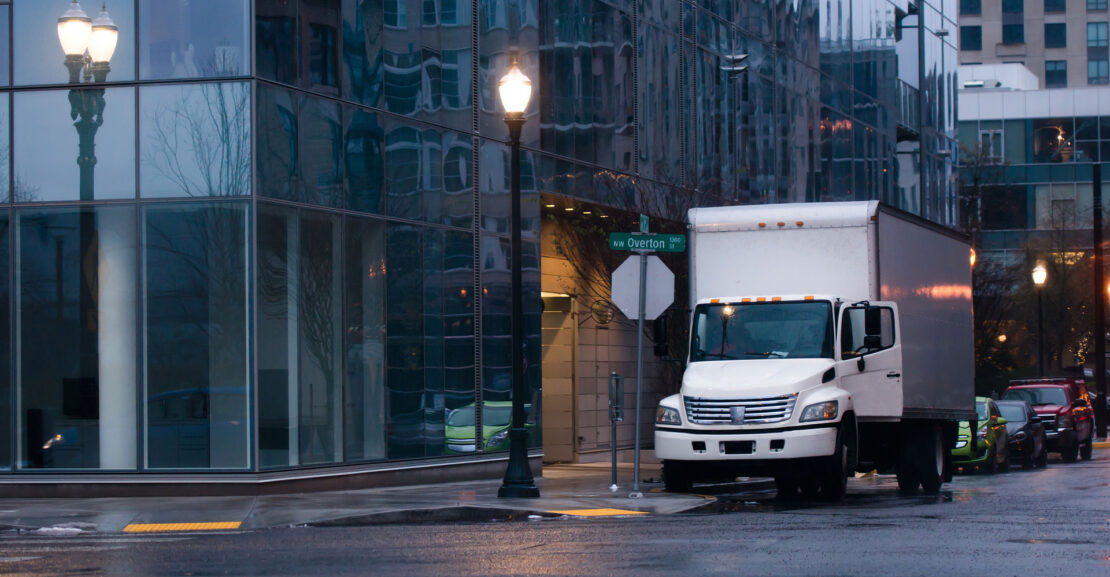
Every fall, fleet managers deal with a predictable change that can still catch a working route by surprise. Daylight Saving Time ends, the clocks fall back, and suddenly a delivery that happened in daylight last week is happening after sunset.
The route did not change. The customer did not move. The driver’s schedule may look exactly the same. But the operating environment is different.
That matters for commercial fleets because shorter days introduce new variables into ordinary work: reduced visibility, harder-to-see pedestrians and cyclists, darker loading areas, more challenging backing situations, and drivers finishing familiar routes under unfamiliar lighting conditions.
For fleets preparing for the seasonal shift, driving safety around the time change deserves more attention than simply reminding drivers to turn on their headlights. The better approach is to look at the entire afternoon operation, from dispatch planning and vehicle inspections to what happens when a driver steps out of the cab at the final stop of the day.
Why the Fall Time Change Matters for Fleet Safety
Daylight gradually gets shorter throughout autumn, so drivers have some time to adjust. The end of Daylight Saving Time is different. When the clocks fall back, darkness effectively moves an hour deeper into the working day overnight.
That creates an abrupt change for fleets running afternoon routes.
Arizona is the exception. Most of the state stays on standard time year-round, so Phoenix-area fleets see shorter days arrive gradually rather than overnight. The same planning steps still apply, just on a slower timeline.
A 4:30 p.m. stop that took place in usable daylight can suddenly happen near dusk or after dark. A loading area that was easy to navigate becomes a collection of shadows. A pedestrian crossing a parking lot is harder to distinguish from the background. A cyclist approaching alongside a truck can be more difficult to detect.
Research from the Insurance Institute for Highway Safety reinforces the concern. Looking at fatal crashes around the spring and fall clock changes, researchers found a 13% increase in fatal pedestrian and bicyclist crashes during the five weeks following the fall change. The shift in ambient light appears to play an important role.
That is particularly relevant for commercial fleets because trucks and vans spend so much of their working lives entering the places where vehicles and people mix: parking lots, neighborhoods, commercial districts, jobsites, loading areas and curbside delivery zones.
Nighttime Driving Changes What Drivers Can See
There is a reason nighttime driving demands more attention even when traffic volume is lower.
The Federal Highway Administration reports that the nighttime roadway fatality rate is roughly three times the daytime rate. Darkness reduces the amount of information available to a driver, and headlights can only replace part of what daylight provides.
Depth perception, peripheral vision and color recognition can all become more difficult. Glare from approaching headlights adds another challenge. Shadows can obscure pedestrians, road edges, debris and other objects that would be obvious during daylight.
Commercial drivers also have more than the road itself to watch. They may be looking for addresses, entrances, loading docks, gates and safe places to position a truck. At the end of a long route, several visual tasks can be competing for attention at once.
For fleet managers, the practical question becomes simple:
Which parts of today’s route will be happening in darkness next month?
That question should be asked before the clocks change.
Adjust Fleet Dispatch Before Darkness Catches the Route
Not every afternoon stop needs to be moved. But some deserve another look.
Fleet managers and dispatchers can review the final portion of regular routes and identify locations where reduced daylight changes the operating conditions. The easiest place to start is with the final two or three stops.
Look closely at locations involving busy parking lots, schools, residential neighborhoods, bike lanes, curbside deliveries, narrow streets, construction sites or poorly illuminated loading areas.
Backing deserves special attention.
A receiving area that is simple to enter at 3:30 in the afternoon may be much more difficult an hour after sunset. Buildings, trailers, dumpsters, equipment and landscaping can create deep shadows. Pavement markings may become harder to see. Pedestrians and employees can appear with little warning.
Dispatchers should also consider traffic. Moving a stop earlier might improve visibility but place the truck into heavier congestion. The goal is to recognize where the risk profile has changed and plan around those specific stops.
A useful exercise is to pull up a typical route and ask:
What do the last three stops look like one hour darker?
Sometimes that single question reveals more than a lengthy seasonal safety checklist.
Watch More Closely for Pedestrians and Cyclists After Dark
One of the biggest changes after the fall time change happens outside the truck.
According to National Highway Traffic Safety Administration data, more than three-quarters of pedestrian fatalities with known lighting conditions occur after dark. Bicyclists face similar visibility challenges, particularly around dawn, dusk and nighttime.
Fleet routes frequently create close interactions with both groups.
A driver may cross a bike lane while turning into a customer entrance, pass through a busy commercial parking lot, back toward a loading area or pull away from a curb while someone approaches alongside the vehicle.
Darkness makes those encounters harder to read.
This is where deliberate scanning becomes especially important. Drivers should allow themselves an extra moment before turning across a sidewalk or bike lane, entering a driveway, backing, or pulling away from a stop.
Intersections deserve the same attention. A pedestrian wearing dark clothing can blend into the background until the vehicle is surprisingly close. Someone standing beneath bright lights can also become difficult to see when glare and contrast interfere with a driver’s vision.
Experience helps, but familiarity can create its own problem. Drivers who have traveled the same route hundreds of times may expect the environment to look a certain way.
After the time change, it doesn’t.
Make a Fall Fleet Lighting and Visibility Check
The weeks before the clocks change provide a natural opportunity for a fleet-wide visibility inspection.
Start with the obvious items: headlights, taillights, brake lights, turn signals, marker lights and backup lights. Then go a little further.
Check Headlights for More Than Function
A headlight can illuminate and still perform poorly.
Dirty lenses, hazy housings, poor alignment or reduced output can limit how much useful road a driver actually sees. Headlights should be clean, properly aimed and working consistently across the fleet.
Clean Windshields, Mirrors and Cameras
A windshield that looks acceptable during daylight can become distracting after dark. Dirt, film and streaks scatter light from approaching vehicles and streetlights.
The same principle applies to mirrors and camera lenses. Small amounts of grime can make a much bigger difference under low-light conditions.
Wiper condition and washer fluid should also be checked as part of the seasonal inspection.
Inspect Reflective Markings and Vehicle Conspicuity
Being visible matters as much as seeing clearly.
Reflectors, reflective tape, marker lights and other required conspicuity features should be clean and in good condition. This becomes especially important when vehicles are parked or maneuvering around dark jobsites, shoulders and loading areas.
A fifteen-minute inspection today can prevent a driver from discovering a visibility problem halfway through a dark route.
For fleets without the time, staffing or shop capacity to handle seasonal inspections internally, this is also a good point to lean on a maintenance partner. Suppose U Drive provides commercial truck maintenance and repair support in Southern California and Phoenix, helping fleets address lighting, visibility and other vehicle issues before they become problems out on the route.
Remember That Commercial Drivers Become Pedestrians Too
Fleet safety discussions tend to focus on what happens behind the wheel. Delivery and service drivers, however, spend a surprising amount of their workday outside the vehicle.
They open cargo doors. Operate liftgates. Move freight. Walk around the rear of trucks. Inspect equipment. Cross parking lots. Secure loads. Talk with customers.
After the fall time change, some of those tasks suddenly happen in darkness.
That makes the driver’s own visibility worth reviewing.
High-visibility or reflective apparel can help drivers remain visible around vehicles and equipment. Flashlights and portable work lights should be checked before they are needed. Drivers should also pay closer attention to where they position themselves when working near traffic or maneuvering vehicles.
This can be particularly important at unfamiliar customer locations. Exterior lighting varies enormously from one property to another, and a driver cannot assume a loading area will provide enough illumination to work safely.
Treat Familiar Backing Areas Differently After Sunset
Backing is one situation where familiarity can become misleading.
A driver may know exactly where a dock, gate or parking space is located. Darkness changes what can be seen on the approach.
A pallet may have been left near the dock. A vehicle may be parked somewhere unusual. A worker may be walking through the area. Construction may have altered the normal path.
At night, those changes can be harder to recognize until the truck is already committed to the maneuver.
Drivers should approach dark backing areas slowly and use mirrors and cameras deliberately. If the situation is unclear, stopping to assess the area before continuing can provide information that cameras and mirrors cannot.
The important shift is mental: a familiar stop after dark should be treated as a changed environment.
Account for Driver Alertness After the Time Change
Visibility gets most of the attention in autumn, but the clock change can also affect the person behind the wheel.
Our bodies do not reset simply because the dashboard clock does.
Research on shift work and transportation safety has shown that changes to sleep timing and circadian rhythms can take several days to settle. FMCSA guidance also emphasizes that time of day can influence driver alertness.
For most fleets, this does not require a major scheduling overhaul. It does justify extra awareness during the first several days after the clocks change.
Managers can reinforce normal fatigue awareness, particularly for drivers with very early starts, long workdays or late-afternoon routes.
The combination matters. A driver finishing a demanding day while adjusting to a different sleep schedule may now be handling the final stops in darkness as well.
Create a Two-Week Fall Fleet Safety Reset
The best response to the time change is not complicated. Use the week or two before the clocks fall back as a seasonal fleet reset.
Review routes. Identify late-afternoon stops that will soon happen near dusk or after sunset.
Inspect vehicles. Check headlights, marker lights, brake lights, turn signals, backup lights, windshields, wipers, mirrors, cameras and reflective markings.
Prepare drivers. Reinforce awareness around pedestrians, cyclists, backing areas, parking lots and low-light customer locations.
Check driver visibility. Make sure reflective apparel, flashlights and work lights are available where needed.
Review dispatch. Determine whether a few higher-risk stops could be completed earlier without creating bigger problems elsewhere in the route.
None of these steps requires slowing down an entire fleet.
They require recognizing that the operating day has changed.
Shorter Days Call for Smarter Fleet Planning
Every fleet knows autumn is coming. Every driver knows the clocks will eventually fall back. Yet the operational effect can be easy to underestimate because nothing on the schedule necessarily looks different.
That is precisely why preparation matters.
The truck is the same. The route is the same. The delivery window may be the same. But a familiar intersection, parking lot, loading dock or jobsite can look dramatically different once darkness arrives an hour earlier.
A little planning before the time change can make the transition far less abrupt.
Review the late routes. Check the lights. Clean the glass. Think about where drivers will be backing, unloading and walking after sunset. Then adjust the handful of situations where darkness meaningfully changes the job.
When the clocks fall back, good fleet planning keeps moving forward.
Frequently Asked Questions About Driving Safety and the Time Change
Why can the fall time change affect driving safety?
When Daylight Saving Time ends, darkness arrives about an hour earlier by the clock. That means trips, deliveries and pedestrian activity that previously occurred in daylight may suddenly happen around dusk or after dark. Reduced visibility can make pedestrians, cyclists, road hazards and objects around loading areas harder to detect.
What should fleets check before Daylight Saving Time ends?
Fleet managers should check vehicle lighting, windshields, mirrors, cameras, wipers and reflective markings. They should also review late-afternoon routes to identify stops that will soon occur after sunset.
Should fleets change delivery schedules when the days get shorter?
Not necessarily. The better approach is to identify individual stops where darkness creates additional challenges, such as heavy pedestrian traffic, poor exterior lighting, frequent backing or complicated loading areas. Those stops may benefit from scheduling adjustments.
What should drivers pay extra attention to after the fall time change?
Pedestrians, cyclists, intersections, parking lots, backing areas and poorly illuminated customer locations deserve particular attention. Drivers should also remember that familiar stops can look substantially different after dark.