

Crossing State Lines? Why CA and AZ Fleets Need to Check Their IRP and USDOT Status Now
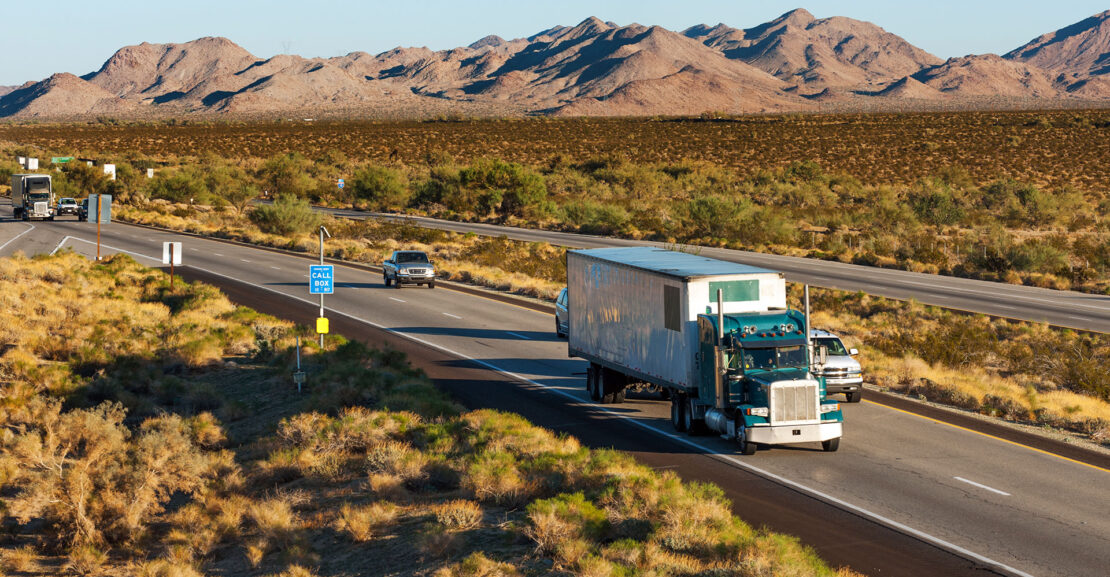
For a growing fleet, crossing a state line can feel like a small operational change. A California business adds customers in Arizona. A Phoenix route becomes regular instead of occasional. A truck that once worked locally is reassigned to support a broader territory.
The distance may be manageable. The administrative shift is not always as simple.
Moving commercial vehicles between California and Arizona can expose gaps that have been sitting quietly in company records for years. An old intrastate classification. A USDOT profile that no longer reflects the fleet. An IRP account tied to outdated information. A federal registration account that nobody inside the company can access.
None of these problems changes what the truck can physically do. They can still determine whether it is ready to work.
That distinction matters as more businesses treat California and Arizona as one connected operating region. Fleet planning has expanded beyond equipment availability, driver scheduling, and route demand. The records behind the vehicle have become part of the capacity equation.
The California-Arizona Fleet Corridor Is Becoming More Connected
California and Arizona fleets do not always expand through dramatic market moves. Often, growth arrives one customer, contract, or delivery lane at a time.
A contractor may take on projects in both states. A food distributor may add Phoenix stops to a Southern California network. A service company may relocate trucks seasonally or place equipment closer to customers as demand shifts.
At first, those decisions feel operational. Where should the truck be based? How many miles will it run? Does the route require a box truck, reefer, stakebed, or tractor?
Registration questions tend to come later, and that order can create friction: the company’s official records may still describe the business as it operated several years ago. The fleet grew, but the USDOT record did not. Routes changed, but the carrier classification stayed the same. The company added interstate work, yet its administrative structure remained local.
The paperwork is not necessarily wrong because someone failed. It may simply be outdated because the business evolvedfaster than the records supporting it.
IRP Plates Do Not Tell the Whole Interstate Story
IRP plates are an important part of cross-state fleet operations, but they are only one part.
The International Registration Plan allows qualifying commercial vehicles to operate in multiple jurisdictions under apportioned registration. Instead of registering the same vehicle separately in every state, a fleet receives an apportioned plate and cab card, with fees distributed according to reported travel.
For a qualifying truck working between California and Arizona, that system makes practical sense.
Still, an IRP plate should not be viewed as a complete interstate operating identity. It addresses how the vehicle is registered. It does not, by itself, confirm that the company’s USDOT status, carrier classification, operating authority, account access, and responsible-carrier information are all current.
That is where many fleet headaches begin.
The plate request may be reasonable. The vehicle may qualify. Yet the federal record behind the company may still describe an intrastate operation, an old address, an outdated fleet size, or a business structure that no longer exists.
The truck and the record are telling different stories.
Interstate Growth Can Outpace a Fleet’s USDOT Record
A USDOT number is often established at an earlier stage in a company’s life. The fleet may have been smaller. Routes may have stayed within California. The business may not have anticipated regular work in another state.
Then the company grows, and the change from intrastate to interstate operation may happen gradually enough that nobody views it as a formal turning point. One Arizona job becomes several. An occasional delivery becomes a scheduled lane. A leased vehicle begins supporting customers on both sides of the state line.
From a business perspective, that is expansion. From a registration perspective, it may represent a different type of operation.
A company that regularly crosses between California and Arizona should make sure its USDOT record accurately reflects interstate activity. An intrastate designation may have been appropriate when the business remained within one state. It becomes harder to defend once the fleet routinely operates beyond that boundary.
This is less about choosing the classification that makes registration easier and more about keeping the official record aligned with the real business.
That alignment can be overlooked because it does not produce revenue, reduce fuel expense, or increase route density. Yetwhen the mismatch surfaces, it can affect all three indirectly by slowing down the equipment the operation depends on.
Private Interstate Fleets Are Not the Same as For-Hire Carriers
Another source of confusion is the tendency to treat every interstate fleet as a trucking company.
They are not the same.
A private fleet may carry its own tools, products, materials, or equipment across state lines as part of a larger business. A contractor moving machinery to an Arizona jobsite may be operating interstate, but it is not necessarily hauling freight for others. A distributor delivering its own inventory is different from a carrier paid to transport property owned by another company.
Both may operate commercial vehicles across state lines. Their federal requirements can differ.
A private interstate carrier generally needs its USDOT information to reflect interstate operations, but it may not need the same operating authority as a for-hire carrier. A for-hire business transporting another company’s property for compensation will often have additional authority requirements.
That is why terms such as interstate, private carrier, for-hire carrier, IRP, and MC number should not be treated as interchangeable.
They describe different parts of the operation.
For fleet leaders, the more useful question is not, “Which box do we need to check?” It is, “What are we actually doing, and do our records describe it accurately?”
Annual IRP Renewals and Biennial USDOT Updates Create a Timing Gap
California and Arizona IRP fleets generally renew their apportioned registration annually. The federal MCS-150 update follows a biennial schedule.
Those timelines are easy to blend together, especially when both processes involve overlapping company, vehicle, mileage, and operating information.
The distinction is important. The federal update is generally required every 24 months, not every year. An IRP renewal, however, still creates a valuable annual checkpoint.
A fleet can change considerably in 12 months.
Vehicles are added and removed. Driver counts shift. Companies move. Operating territories expand. A business begins hauling different cargo or serving new customers. The person who handled federal registration leaves, and the login credentials disappear with that person.
Waiting for the federal filing deadline to review the record may satisfy the calendar, but it does not always serve the operation.
The stronger habit is an annual comparison. Does the USDOT record still match the company? Does the interstate classification reflect where the fleet is running? Is the correct carrier identified? Can someone authorized inside the organization access the account?
That review may take place alongside IRP renewal, but its value extends beyond registration. It gives the fleet a chance toreconcile the administrative version of the company with the business that exists today.
Motus Made Account Access Part of Fleet Continuity
The transition to FMCSA’s Motus system has added a modern problem to an old process.
Federal registration actions now depend heavily on Login.gov access, identity verification, authorized company roles, and the ability to claim an existing USDOT record. For many fleets, that means the person who controls the account has become almost as important as the information inside it.
The old USDOT PIN is no longer required to create or manage a company account. Login.gov credentials and identity verification have replaced it as the way into federal registration actions.
This can expose weak points that were easy to ignore under the previous system.
The company official may have left years ago. The registered email may belong to an outside provider. Nobody may know which Login.gov account is connected to the business. An employee may understand fleet operations perfectly but still lack the authority needed to change the federal record.
Account access can sound like an IT issue. In practice, it is an operational dependency.
A fleet that cannot access its Motus record may struggle to complete a biennial update, correct an interstate classification, change company information, or address a registration problem when a new vehicle is waiting.
The equipment may be sitting in the yard. The delay is digital.
That is why ownership of federal accounts should be treated like ownership of insurance records, maintenance files, fuel cards, or vehicle titles. Someone should know where the account lives, who controls it, and how access transfers when roles change.
Administrative Problems Usually Appear at the Worst Moment
Registration mismatches rarely announce themselves during a quiet week.
They appear when a customer needs another truck. When an IRP renewal is approaching. When a fleet is opening an Arizona route. When a leased vehicle needs to be placed into service quickly. When seasonal demand is rising and available capacity already feels tight.
At that point, the company is no longer reviewing records as a planning exercise. It is trying to solve a problem under pressure.
That can lead to temporary permits, delayed plate processing, repeated support requests, vehicle reassignment, and staff time spent moving between state and federal systems.
The financial impact may not arrive as one large penalty. More often, it appears through lost time.
A truck remains unavailable. A route is covered inefficiently. A delivery is pushed back. A manager spends half a day searching for account credentials instead of managing the fleet — administrative problems with real operational consequences.
Cross-State Fleet Readiness Starts Before the Plate Request
The smartest time to review interstate status is before the fleet needs something from the registration system.
That might be before adding an apportioned vehicle, expanding into Arizona, renewing a California IRP fleet, signing a long-term lease, or assigning a local truck to regular interstate work.
The review does not need to become a major compliance project. It begins with a few basic questions.
Does the USDOT record reflect the company’s current name, address, fleet size, and operating activity? Is the business correctly identified as interstate or intrastate? Is it operating as a private carrier or for-hire carrier? Is operating authority active when required? Can an authorized company official access Login.gov and Motus?
Most importantly, do the IRP account, USDOT record, and actual use of the truck all point to the same operation?
When those pieces agree, the registration process is more likely to support the fleet rather than interrupt it.
Better Fleet Planning Includes the Records Behind the Equipment
Suppose U Drive works with companies that need commercial vehicles to support real jobs, routes, customers, and growth plans. Those conversations often begin with equipment, but the most useful planning also considers where the truck will operate and how quickly it needs to enter service.
A vehicle intended for local California work presents a different registration picture than one moving regularly between California and Arizona. A private fleet may have different needs than a for-hire carrier. A company with active Motus access is in a stronger position than one discovering an account problem after the truck has been selected.
Suppose U Drive does not control government processing or make federal classification decisions. What an experienced fleet partner can do is raise the right questions early, before an administrative mismatch becomes an availability problem.
Cross-state operations create opportunity. They also reveal whether the systems behind the fleet have kept pace with the business.
A truck can be ready in every visible way and still be waiting on a record nobody thought to check. For California and Arizona fleets, that makes IRP and USDOT status more than paperwork. It is part of knowing whether the capacity on the lot is truly available when the operation calls for it.
FAQs
Is an MCS-150 update required every year?
FMCSA generally requires the MCS-150 biennial update every 24 months. Fleets should also update their information when important business or operating details change. Reviewing the record during the annual IRP cycle can help catch outdated information early.
Does every interstate fleet need an MC number?
No. Private carriers transporting their own property generally follow a different authority path than for-hire carriers transporting property for compensation. Interstate status and operating authority are related, but they are not the same requirement.
Do IRP plates replace other interstate credentials?
No. IRP covers apportioned vehicle registration. Depending on the operation, a fleet may also need an active USDOT record, fuel-tax credentials, operating authority, insurance filings, permits, or other documentation.