

Commercial Truck Rentals in Phoenix: When Renting Makes More Sense Than Owning
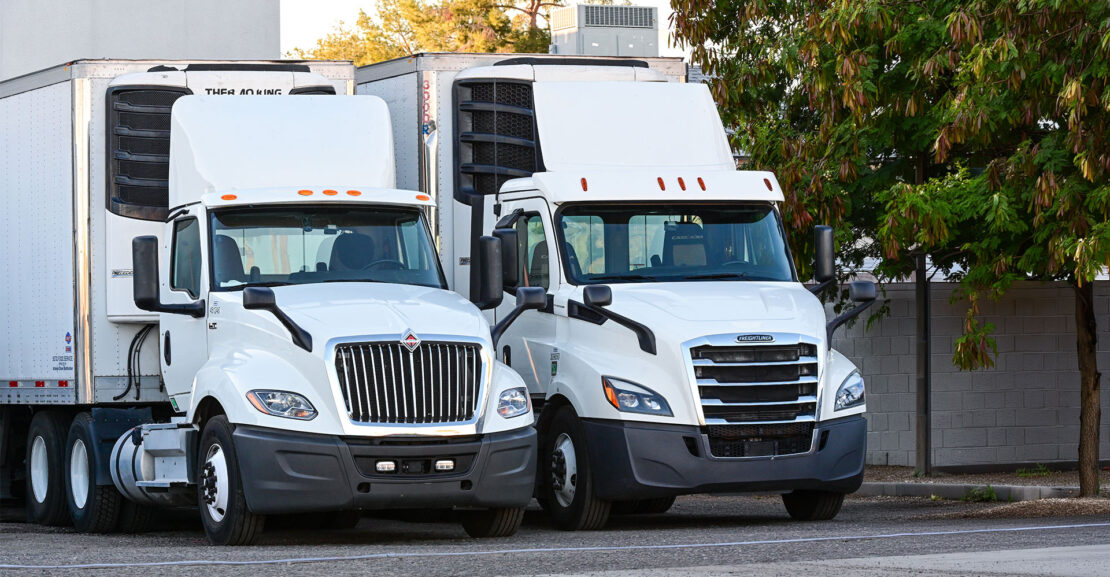
You land a 6-month distribution contract that requires three box trucks starting in two weeks. Buying ties up $150K in capital you need elsewhere. Financing takes 45 days minimum. Your maintenance shop is already at capacity. This is exactly when Phoenix truck rentals prove their value (not as a fallback, but as the right strategic move for operators who understand that fleet decisions are really risk decisions.
That is why Phoenix truck rentals have become a deliberate strategy, not a fallback. Renting can reduce capital risk, protect operating cash, and give you breathing room when the market is uncertain or your business is growing faster than your fleet plan can keep up.
Phoenix Fleet Planning Reality: Growth, Peaks, and the Cost of Guessing Wrong
There is a reason Phoenix feels like a magnet for distribution, construction, and regional service businesses. The market is active, the geography supports hub-and-spoke operations, and the metro keeps expanding. But with growth comes variability, and variability punishes rigid decisions.
Phoenix demand swings are real, even for “stable” operators
Many businesses in the region run steady work until they do not. A new customer comes on. A facility launch ramps slower than expected. A large project hits a surprise delay. You still have payroll. You still have insurance. You still have equipment costs, whether the trucks are moving or sitting.
Renting creates flexibility where ownership creates obligation
Owning can be the right move for consistent, predictable utilization. But if your utilization is lumpy, rentals can prevent you from carrying year-round costs to support part-year demand. In Phoenix, that matters. The city can make you look brilliant in spring, then overly committed by late summer.
The Real Cost of Owning a Truck: More Than the Purchase Price
Ownership decisions often get framed as a simple comparison: monthly payment versus rental rate. That is not the real math. The real math is total cost of ownership, plus the cost of being wrong about what you need.
Total cost of ownership has “quiet” categories that add up fast
Owning comes with costs that do not show up on day one. They show up later, usually at the worst time.
Maintenance that is not just parts and labor, but scheduling and downtime
Tires, brakes, and wear that spike when routes or loads change
Insurance swings, especially when you add units or adjust coverage
Registration, compliance admin, and the time your team spends managing it
Depreciation and resale risk, which is rarely predictable in real time
You can budget for many of these. What you cannot budget cleanly is the disruption cost when a unit goes down and you do not have a ready replacement. That is not a line item. That is a missed delivery, a strained customer relationship, a driver sitting, and a dispatcher trying to patch the day.
Insurance costs shift in ways ownership projections often miss
When you own equipment, your commercial auto insurance premiums respond to several variables: driver history, coverage limits, claims experience, and the number of units on the policy. Add three trucks to your fleet and your insurance provider may require higher liability limits or adjust your experience modifier. A single at-fault accident can trigger premium increases that persist for 3 to 5 years.
Renting transfers much of that insurance exposure. Most commercial truck rental agreements include comprehensive coverage and liability protection. You are not adding permanent units to your policy. You are not creating multi-year premium exposure from short-term capacity needs. For operators managing tight margins or working with drivers who do not have perfect records, this insurance benefit often closes the cost gap between renting and owning faster than the monthly rate comparison suggests.
The most expensive truck is the one that cannot run
Phoenix operators tend to be practical. They care about uptime. They care about reliability. They care about not losing a job because equipment did not show up ready.
Ownership can deliver that, but it demands constant management. Rentals can help stabilize uptime during periods when your internal maintenance bandwidth is stretched, or when you are building a fleet plan but you are not ready to commit.
Why the Rental Math Works Better Than It Looks
Most operators compare rental rates against monthly ownership payments and assume ownership wins on cost. That comparison misses most of what makes rentals valuable.
Rentals protect capital when you need it most
Capital locked in equipment cannot fund growth. It cannot cover payroll when a customer pays late. It cannot support inventory expansion or new hiring. Ownership converts liquid capital into a depreciating asset with carrying costs that persist whether the truck runs or sits.
Renting keeps that capital available for the parts of your business that generate revenue, not just the assets that support it. For growing operations or businesses managing cash flow variability, that flexibility often matters more than the difference in monthly cost.
Rentals bundle costs that ownership spreads unpredictably
Commercial truck rentals include insurance coverage, maintenance responsibility, breakdown support, and often roadside assistance in a single predictable rate. You know the cost upfront. No surprise repair bills. No insurance premium spikes after a claim. No scrambling for backup coverage when equipment goes down.
Ownership separates these costs across different budget lines and different timing. A transmission failure does not wait for your maintenance budget to recover. An accident does not consult your cash flow forecast before triggering an insurance adjustment. The total cost of ownership includes these disruptions, and they are rarely predictable.
Rentals let you match cost to actual utilization
Ownership creates fixed costs whether the work materializes or not. Buy three trucks for a contract and you carry the full cost even if the customer reduces volume, delays the start, or cancels early. Your payment stays the same. Your insurance stays the same. Your compliance obligations stay the same.
Rentals scale with the work. Add capacity when demand arrives. Return it when demand softens. Pay only for what you actually use during the time you actually need it. For operations with variable demand, seasonal patterns, or project-based work, this alignment between cost and revenue is often worth more than a lower monthly rate on permanent equipment.
5 Ways Renting Makes More Sense Than Owning in Phoenix
Renting is not always cheaper on a pure monthly comparison. But it can be smarter, especially when you account for risk, speed, and optionality.
1. You need immediate capacity without the lead time penalties of ownership
Equipment procurement is not fast. Order a new truck and you are looking at 8 to 12 weeks minimum, often longer for specialized configurations. Secure financing and you are adding another 2 to 3 weeks of paperwork and approval cycles. Meanwhile, the customer who needs coverage is not waiting.
Phoenix truck rentals solve the timing gap. Add capacity in days, not months. Cover the critical window while you make longer-term decisions with actual operational data instead of projections.
2. You want to protect cash and avoid capital lock-in
Cash is flexibility. It is hiring. It is inventory. It is a buffer when a big customer pays late or when a project timeline shifts.
Buying or financing equipment consumes cash and creates long commitments. Renting can keep your capital available for the parts of your business that generate growth, not just the assets that support it.
3. Your equipment needs are still evolving
Many operators buy the wrong truck for the job they end up doing. It happens all the time. The lane changes. The payload changes. Dock conditions change. A liftgate becomes necessary. A box length becomes inconvenient. A route becomes tighter, with more stops and shorter dwell times.
Renting lets you learn without paying for a multi-year mistake. You can match equipment to the actual work, then decide what should become permanent.
4. Your operation cannot absorb downtime during critical periods
Phoenix conditions are hard on equipment. Summer heat accelerates tire wear and cooling system failures. Monsoon season brings dust infiltration that clogs filters and sensors. If you are running a lean operation, one truck down during peak season does not just mean a missed delivery (it means paying a driver to sit idle, scrambling for last-minute coverage, and potentially losing a customer who will not accept “we had a breakdown” as an explanation.
Renting creates a continuity buffer. During peak periods, new customer onboarding, or when your maintenance schedule is already stretched, rentals reduce your exposure to the cascading costs of unexpected downtime. The rental company absorbs the breakdown risk; you keep the delivery commitment.
5. You want a cleaner way to handle seasonal or surge demand
Some Phoenix businesses are seasonal by nature. Others are seasonal because their customers are seasonal. The pattern is the same: you do not want to carry 12 months of cost for 6 months of demand.
Rentals create a cleaner surge plan. Add units for the spike. Return them when you return to baseline. Keep the business lean without starving it.
A Simple Renting vs Owning Framework for Fleet Managers
If you want a decision tool that works in the real world, keep it grounded. You do not need perfect forecasts. You need honest inputs.
Step 1: Define the job in plain terms
Before you talk equipment, define the work.
How many days per week will this truck run?
How many miles per day, realistically?
How many stops?
What payload range?
What time window is this need tied to, and what happens if the work ends early?
If you cannot answer these, ownership is often premature. Renting gives you time to learn.
Step 2: Identify your risk tolerance
Some businesses can absorb downtime. Others cannot. Some can carry idle assets for future growth. Others need every dollar working.
If your tolerance for uncertainty is low, rentals can be the safer play even if the monthly cost looks higher on paper. Paper does not capture disruption well. Operations do.
Step 3: Find your break-even time horizon
Ask a blunt question: how long do you need this capacity?
If the need is short, renting is usually cleaner. If the need is long and stable, ownership can be strong. The trap is assuming “long and stable” when the work is still evolving.
Step 4: Treat flexibility as a measurable benefit
Flexibility is not a soft benefit. It has value.
It reduces the cost of wrong decisions
It reduces the cost of rapid growth
It reduces the cost of contract volatility
It reduces the time between demand and coverage
In Phoenix, speed and adaptability consistently outperform rigid optimization.
What to Ask Before You Rent a Commercial Truck in Phoenix
A rental decision is only as good as the questions you ask upfront. The goal is to get the right truck and avoid operational friction.
Ask work-fit questions first
What class and configuration matches the payload and stop density?
Do you need a liftgate?
What box length actually fits your docks and delivery points?
Any special requirements from the customer or site?
Ask timeline questions that protect you from surprises
What is the minimum term?
How does extension work if the project runs long?
What happens if you need to swap equipment midstream?
Ask support questions that impact uptime
What is the process if a unit needs service?
What is the replacement pathway if the truck is down?
Who is your point of contact when the day goes sideways?
The best rentals are not just equipment. They are a support structure that respects the pace of a real workday.
Common Mistakes Phoenix Operators Make with Rentals
Renting is simple, but it is not casual. The mistakes are predictable, and they are avoidable.
Renting based on availability instead of job requirements
Taking “what’s available” instead of “what fits the job” is expensive in ways that do not show up on the invoice. A 26-foot box when you need 20 feet costs you extra fuel, tighter maneuvering at stops, and longer dwell times at docks. A truck without a liftgate when 40% of your stops need one means your driver is hand-bombing freight in Phoenix summer heat. These are not minor inconveniences (they compound daily. Your driver gets slower, more frustrated, and more likely to leave. Your fuel costs creep up. Your delivery windows slip.
Define the job requirements first, then match the equipment. If the exact configuration is not available, it is usually smarter to wait a few days or adjust your timeline than to take the wrong truck and pay for it in operational friction for weeks.
Treating peak season like it will sort itself out
If you know your busy window is coming, plan early. Rentals are strongest when they are part of a plan, not a scramble. Waiting until you are already behind means settling for whatever equipment is left, which circles back to the first mistake.
Treating rentals as a transaction instead of as operational intelligence
This is the most underutilized advantage of renting. Every rental is a real-world equipment test under actual operating conditions. You learn whether a 16-foot box is really sufficient or if 20 feet would reduce trips. You discover that a liftgate adds 15 minutes to your route time but eliminates back injuries. You find out that the payload capacity you thought you needed was based on a customer’s overestimate, and you can run smaller, cheaper equipment.
Smart operators treat rental periods as paid research. Track fuel economy. Track stop times. Track driver feedback. Track loading efficiency. When it is time to make an ownership decision, you are working with operational data instead of sales brochures and assumptions. That intelligence often pays for the entire rental cost by preventing you from buying the wrong permanent equipment.
Renting Can Be the Smartest Way to Stay Agile in Phoenix
Phoenix is not always predictable. Customer demands shift. Contracts ramp slower than expected or end without warning. Routes change. That variability is exactly why rentals make sense for growing businesses, seasonal operators, and anyone who cannot afford to guess wrong on permanent equipment decisions.
Phoenix truck rentals are not a compromise when you use them strategically. They reduce capital risk, protect uptime during critical periods, and keep your operation aligned with actual demand rather than projected demand.
Suppose U Drive supports Phoenix operators with rental trucks built for real work. Same-day equipment swaps when service is needed. Flexible terms that adapt when timelines shift. Configurations that match what Phoenix operations actually require: liftgate-equipped box trucks, refrigerated units, dock-height straight trucks for tight delivery routes.
Match the truck to the work. Keep uptime strong. Stay aligned with what is actually happening, not what you hoped would happen.
FAQs
Can renting help me decide what I should eventually buy?
Yes, and this is one of the most underutilized advantages. Renting functions as a paid equipment test under real operating conditions. You learn whether your payload estimates were accurate, whether a liftgate actually saves time or just adds weight, and whether your route density supports a larger box or needs something more maneuverable. Track fuel economy, stop times, driver feedback, and loading efficiency during the rental period. When it is time to make an ownership decision, you are working with operational data instead of manufacturer specs and assumptions. That intelligence often prevents costly mistakes (like buying a 26-foot truck when your actual operations run better with a 20-footer) and can easily justify the rental cost.
When does renting make more sense than owning for Phoenix operators?
Renting often wins when demand is seasonal, contract-based, or still evolving. It is also a strong choice when you need fast capacity, want to preserve cash, or cannot afford downtime risk during critical periods.
How do I compare renting vs owning without overcomplicating the math?
Start with your time horizon and your utilization. If the need is short or uncertain, renting usually provides a cleaner answer. If the need is stable and year-round, ownership becomes more compelling, especially when you can forecast maintenance and downtime realistically.
Are Phoenix truck rentals only for short-term needs?
Not necessarily. Rentals can cover everything from a few days to multi-month stretches, depending on the operation and the term structure. Many fleets use rentals as a bridge during growth phases, facility launches, or shifting customer requirements.
What information should I have ready before I call about renting a commercial truck?
Have the basics: payload range, expected miles per day, stop density, whether you need a liftgate, and the expected timeline. If you can also describe where the truck will be working, such as local deliveries, job sites, or distribution runs, you will get a better match.
How far in advance should I plan for peak season rental needs in Phoenix?
If you already know your surge window, earlier is better. Booking ahead reduces the risk of settling for the wrong configuration and helps you lock in the equipment you actually need for the job.