
The New Black Friday Math: Phoenix Retail Delivery in a Booming Valley
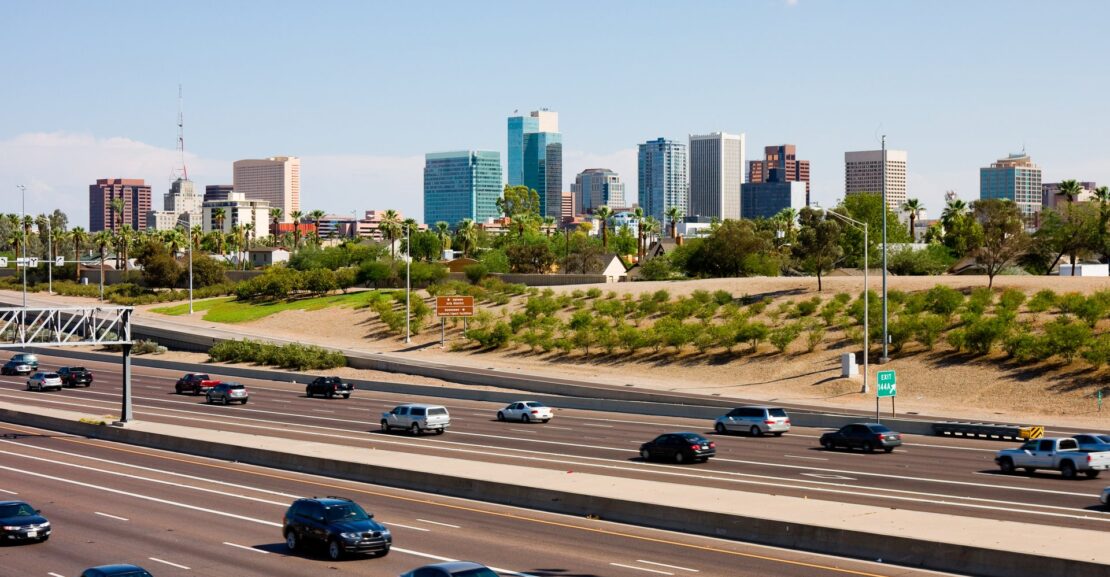
Black Friday looks very different from behind the wheel of a Phoenix retail delivery truck.
For shoppers, the season is measured in discounts, packages, and delivery notifications. For the fleets supporting Valley retailers, it is measured in pallets, replenishment runs, dock appointments, available drivers, and whether another truck is ready when demand suddenly jumps.
That distinction matters more in Phoenix than it might in a mature coastal market. The Valley is preparing for another holiday season. Meanwhile, its population, retail footprint, warehouse network, and distribution infrastructure continue to expand.
Black Friday is arriving in a market that is still growing into itself. For local fleets, that changes the math. Holiday volume matters, but the bigger question is whether the fleet has enough usable capacity in the right places at the right times.
IN BRIEF
Phoenix retail delivery faces a different Black Friday than mature coastal markets because the Valley and its warehouse network are still growing. Census Bureau estimates released in March 2026 show metro Phoenix added 59,065 residents from July 2024 to July 2025. For local fleets, holiday readiness depends on usable capacity by route and time window, plus a flexible layer of trucks for peaks.
Black Friday Is Now a Multi-Week Delivery Peak
Black Friday traditionally means a rush that begins after Thanksgiving and subsides when the weekend ends. Retail logistics stopped working that way a long time ago.
Promotions now start as early as October and run through Cyber Monday, December fulfillment, and the post-holiday returns cycle. Adobe’s Sept. 28, 2026, forecast projects $275.1 billion in U.S. online holiday spending for November and December, up 6.7% from 2025. It expects Black Friday to grow 9.2% to $12.9 billion, faster than Cyber Monday.
Transportation operations face several weeks of heavier, uneven demand rather than one extraordinary Friday, as retailers may need more frequent replenishment and distribution centers may push additional outbound volume.
Delivery routes can fill sooner than expected, while regular commercial customers still expect their usual service. Can the fleet absorb the surge without disrupting everything else it already does? That is the operational question.
“The Day After: A Fleet Playbook for Black Friday Delivery Logistics” looks at that question nationally; here is how it plays out in the Valley.
Phoenix Is Growing on Both Sides of the Supply Chain
Metro Phoenix keeps adding consumers. Census Bureau estimates released March 26, 2026, show Phoenix-Mesa-Chandler added 59,065 residents between July 2024 and July 2025, the fourth-largest numeric gain of any U.S. metro, for a population of about 5.23 million.
Those residents create recurring demand for groceries, furniture, electronics, and building materials. Virtually everything they buy spends part of its trip on a truck.
At the same time, more inventory is being positioned closer to those consumers.
CBRE’s Q2 2026 Phoenix industrial figures show 47.7 million square feet of cumulative industrial net absorption over the previous three years. Net absorption is the net change in occupied space. CBRE also counted 77.5 million square feet of new deliveries in that period.
Cushman & Wakefield’s Bulk Blueprint report showed another notable shift: direct vacancy among Phoenix warehouses larger than 300,000 square feet fell from 32.5% in 2022 to 5.8% by the second quarter of 2026.
Retailers are adding to that footprint. Burlington Stores broke ground in April 2026 on a distribution center of nearly 2 million square feet in Buckeye, expected to open in 2028.
That combination tells an important story. Phoenix is developing a deeper distribution ecosystem that puts more products within reach of a growing population of shoppers.
For local fleets, that can mean more opportunities. It also means more pressure on the network connecting warehouses, stores, businesses, and customers.
More Warehouses Change Where the Miles Happen
It is tempting to think that placing inventory closer to consumers automatically simplifies transportation. In some ways it does. Long-distance supply chains can become shorter, and businesses can position goods closer to their final markets.
But the truck miles do not disappear. They change.
Products that arrive at a Phoenix-area distribution center still have to move through the next stages of the supply chain. That can mean facility transfers, store replenishment, final-mile service, and eventually returns. During the holiday season, many of those movements accelerate at once.
Heavier inbound volume at a distribution center may generate more outbound routes. A retailer selling through inventory faster than forecast may require another replenishment run. E-commerce operations may need additional vehicles because normal routes are reaching practical capacity before the workday is over.
More and more, Phoenix retail delivery means moving goods efficiently through a dense local and regional network. That makes local truck capacity far more valuable.
How the Valley’s Geography Changes Phoenix Retail Delivery
Phoenix has another characteristic that matters during peak season: it is enormous.
Valley logistics stretch across a wide geography. The West Valley has major industrial development, the East Valley continues to grow, and freight concentrates around corridors such as I-10.
Arizona’s central Southwest location also gives distributors access to major markets throughout the region. The Arizona Commerce Authority notes that the state offers access to more than 86 million consumers within a one-day trucking radius.
But proximity on a map does not automatically translate into efficient delivery capacity.
A truck may be close to its destination and still lose productive time to loading delays, congestion, dock appointments, or unloading. Other times, distance itself is the problem.
Compare two 25-mile local runs. One consumes three hours of a driver’s day, while the other finishes quickly enough to allow a second productive turn. Their operational costs are very different.
That distinction becomes especially important when demand is not distributed evenly across the Valley. West Valley distribution operations may see a completely different holiday surge than businesses serving Scottsdale, Tempe, Mesa, Chandler, or the Southeast Valley. Capacity available at 10 a.m. may effectively disappear by mid-afternoon if trucks, drivers, docks, and receiving windows are already committed.
So peak-season planning works better by facility, route, and time window (see “The Valley’s Delivery Math”). Truck counts across the metro area say much less.
Why Usable Capacity Matters More Than Truck Count
Counting trucks is easy. Measuring usable capacity is harder. Usable capacity is the delivery work a fleet can actually complete in a day once loading, traffic, receiving windows, and driver hours are factored in.
Picture a fleet manager looking at 10 trucks and estimating capacity by how much each vehicle can carry. But payload is only one variable.
Actual delivery capacity depends on the truck, driver, loading time, route, and receiving window working together, so a constraint anywhere in that chain affects everything after it.
Consider a truck capable of making two store replenishment runs per day under normal conditions. If holiday congestion, warehouse delays, or longer unloading times add 45 minutes to each route, that second run may no longer fit comfortably into the schedule.
The business technically has the same number of trucks. Its usable daily capacity has still fallen.
Peak demand can make apparently unused capacity valuable. Another store replenishment request may arrive when a distributor’s regular fleet is fully committed. A retailer may need to split an overloaded route into two.
A truck could go down during one of the busiest weeks of the year. Or an unexpected shipment might need to move immediately.
In each case, the underlying problem is the same: the business has demand it can serve, but no truck available to serve it.
During peak season, parked capacity still has value. It can move when something changes.
That is why Phoenix fleets preparing for holiday demand should look beyond vehicle counts and examine actual operating cycles. How long does loading really take during peak periods? Which routes are most vulnerable to delays?
Which customers have rigid receiving windows? Where are drivers consistently losing time? Which routes can realistically make a second turn?
Sometimes a smaller fleet on predictable, efficient routes can provide more usable capacity than a larger fleet with little room left in its schedule.
Building a Fleet That Can Flex With Demand
Most businesses have good reasons to avoid keeping unnecessary vehicles sitting around. A truck that is not working still represents capital, insurance, maintenance, parking, and other costs.
But a fleet designed precisely around average demand can become fragile when volume suddenly increases.
Consider a core-and-flex fleet. The core fleet handles predictable everyday demand. Extra capacity is added when seasonal volume, new customers, equipment downtime, or temporary routes push past that baseline.
That flexible layer might include leased equipment, short-term rentals, outside transportation, or some combination of the three. The right mix depends on how long the extra demand will last, how predictable it is, and whether the business needs direct control over the equipment and route.
For Phoenix businesses that do not want to buy equipment around a temporary demand spike, rental capacity can provide a middle option between an owned fleet and outsourced transportation.
What matters most is enough control over capacity that an unexpected opportunity does not automatically become an operational problem.
When Seasonal Demand Starts Looking Permanent
After the holiday rush, take stock. Not everything that appeared seasonal will necessarily disappear.
Temporary replenishment routes can expose customer relationships capable of becoming permanent. A retailer may discover that an additional delivery day improves inventory flow enough to retain it. A distributor that keeps running out of capacity may learn the holiday problem was a sign it has outgrown its normal fleet.
That possibility is particularly relevant in Phoenix because the underlying market continues to expand. Population growth, warehouse development, retail investment, and distribution activity can gradually turn yesterday’s peak volume into tomorrow’s normal operating level.
Once the holiday season ends, operators can compare what happened with what they expected. Did temporary customers become recurring customers? Did one geography consistently create scheduling problems?
Did the fleet repeatedly outsource the same type of route? Did additional equipment materially improve reliability? Were trucks still running near capacity after the seasonal surge passed?
Those answers help separate a temporary capacity problem from a permanent fleet requirement. Black Friday works as an annual stress test that shows where the fleet bends, where it breaks, and where added capacity could pay off all year.
Local Truck Capacity Is a Competitive Advantage in Phoenix
Retailers and distributors make promises every day.
The shelf will be stocked, and the order will arrive. The replacement inventory will be there tomorrow. The customer’s delivery window will be met.
Transportation capacity determines whether many of those promises survive when demand suddenly accelerates.
Phoenix is an especially interesting case heading into peak retail season. Its growing population and distribution network create more opportunities for goods to move locally. Every added movement, though, competes for trucks, drivers, loading time, and delivery windows.
For fleet operators, the advantage comes from knowing exactly how much usable capacity the operation has, where the constraints appear, and how capacity will be added when circumstances change.
In a mature market, peak season can become an exercise in squeezing more throughput from an established logistics network. Phoenix presents a somewhat different challenge. Here, the network itself is still expanding, and new demand can appear alongside new warehouses, new stores, new customers, and new routes.
That makes flexibility especially valuable.
Suppose U Drive’s Phoenix location gives Valley businesses access to work-ready commercial trucks for seasonal demand, temporary routes, and unexpected equipment needs, and can give a stretched regular fleet more room to move. Availability can vary by location and season.
Black Friday will always be about demand. In a growing market like Phoenix, the more important question may be how quickly a fleet can answer it.
Talk with the Suppose U Drive team in Phoenix about holiday capacity: call (800) 404-8800 or request a quote.
Frequently Asked Questions
How does Black Friday affect Phoenix retail delivery?
Black Friday adds far more to Phoenix retail delivery than consumer parcels: warehouse transfers, store replenishment runs, wholesale deliveries, final-mile routes, and later returns. Adobe’s Sept. 28, 2026, forecast expects Black Friday online spending in the U.S. to grow 9.2% to $12.9 billion. Metro Phoenix’s growing distribution footprint concentrates more of those truck movements within the Valley.
How early should Phoenix fleets plan for holiday delivery demand?
Phoenix fleets should start holiday delivery planning well before Thanksgiving, because promotions now begin as early as October. Fleets should review route times, driver availability, maintenance, receiving windows, and backup capacity before demand starts to climb. Booking extra trucks before routes fill can help keep dispatch from scrambling during Thanksgiving week.
What is flexible fleet capacity?
Flexible fleet capacity is transportation capacity that can be added or repositioned as demand changes. It lets a core fleet cover everyday demand while extra trucks cover holiday peaks, new routes, or equipment downtime. Depending on the operation, it can include rental trucks, leased vehicles, outside transportation, reserve equipment, or adjustments to existing routes and schedules.
Should a business rent or lease additional trucks for peak season?
Rent for short peaks and lease for longer ones: the choice depends mainly on how long the extra capacity will be needed. Short-term rentals can make sense for temporary surges, special routes, or unexpected equipment needs. Leasing may fit better when higher demand is expected to continue beyond the holiday season.
How can Phoenix businesses estimate their true holiday delivery capacity?
Phoenix businesses can estimate true holiday delivery capacity by measuring actual route performance, not just counting trucks. Evaluate loading time, drive time, receiving windows, driver availability, and the realistic number of turns each vehicle can complete. Lose 45 minutes per route to holiday delays, and a truck may lose its second daily run.
Why is Phoenix becoming a retail distribution hub?
Phoenix is becoming a retail distribution hub because it pairs fast population growth with large new warehouses and one-day trucking access to Southwest markets. CBRE’s Q2 2026 Phoenix figures show 77.5 million square feet of new industrial space delivered over the previous three years. For Phoenix retail delivery fleets, that means more local and regional truck movements to plan around.
Resources / References
U.S. Census Bureau, “Slow Growth Impacts Nation’s Largest Counties Hardest,” March 26, 2026. https://www.census.gov/newsroom/press-releases/2026/2025-popest-metro-micro-counties.html
CBRE, “Phoenix Industrial Figures Q2 2026,” Q2 2026. https://mktgdocs.cbre.com/2299/05578a01-f671-4c81-b5a5-38669356d1cc-208200488/Phoenix_Industrial_Figures_Q2_.pdf
Cushman & Wakefield, “The Bulk Blueprint,” undated. https://www.cushmanwakefield.com/en/united-states/insights/the-bulk-blueprint
Adobe Analytics, “U.S. Holiday Shopping Season to Hit Record $275.1 Billion Online, Rising 6.7% YoY,” Sept. 28, 2026. https://news.adobe.com/news/2026/09/adobe-us-holiday-shopping-season-to-hit-record
Arizona Commerce Authority, “Arizona: Location & Infrastructure,” undated. https://www.azcommerce.com/business-first/strategic-location/
Arizona Commerce Authority, “Burlington Stores Breaks Ground on Future Distribution Center in Buckeye,” April 8, 2026. https://www.azcommerce.com/news-events/news/2026/4/burlington-groundbreaking/